 blog
blog
Is a Professional LinkedIn Headshot Worth It?
Table of Contents
- What a Professional LinkedIn Headshot Actually Does for Your Career
- How to Prepare for Professional Headshots
- How Long Does a Professional Headshot Session Take
- Professional Headshot Tips for Musicians and Creative Professionals
- Professional Photographer vs. DIY and Smartphone Alternatives
- Measuring ROI: Does Your New Headshot Actually Improve Results
- Cost-Benefit Framework by Career Stage and Budget
- Frequently Asked Questions
Last Updated: October 7, 2026
What a Professional LinkedIn Headshot Actually Does for Your Career
A professional LinkedIn headshot is your first handshake with recruiters, hiring managers, and industry connections.
At James DeSalvo Photography, we work with musicians, creative professionals, and performers who understand that visual presentation matters. Your profile photo tells a story about who you are and how seriously you take your career.
The question isn't whether a professional headshot is nice to have. It's whether you can afford not to have one.
First Impressions and Recruiter Attention
Recruiters make snap judgments. A clear, professional headshot signals that you're serious about your career and have invested effort in how you present yourself.
When a recruiter searches for candidates, they see thumbnails first. A professional photo draws attention and makes your profile clickable; a blurry, poorly lit, or casual photo gets scrolled past.
Your headshot also affects how you appear in search results. LinkedIn's algorithm favors profiles with photos. Profiles with professional headshots see more visibility in recruiter searches than profiles without them.
Profile Views, Connection Requests, and Engagement
Your profile photo influences how often people visit your profile and interact with your content. An approachable headshot invites connection and makes people want to learn more about you.
Profiles with clear professional photos receive more connection requests and higher engagement on posts and updates. People are more likely to respond to someone whose face they can see clearly.
This effect compounds over time. More visibility leads to more opportunities. More opportunities lead to better career outcomes.
How to Prepare for Professional Headshots
A successful headshot session starts before the photographer arrives. Your preparation determines the final image quality.
Wardrobe, Grooming, and Personal Presentation
Wear something that reflects your industry and personal brand, business casual or slightly fashion-forward for creative professionals, traditional business attire for corporate roles.
Choose solid colors that complement your skin tone. Avoid busy patterns, logos, and distracting graphics. Your face should be the focus, not your shirt.
Grooming matters more than people admit. Get a fresh haircut a few days before your session, not the day of. Your hair needs time to settle. Groom facial hair neatly.
Communicating Your Brand and Vision
Before your session, decide what you want your headshot to communicate, approachable, professional, creative, trustworthy, and align your expression, posture, and styling with that vision.
Share reference images with your photographer, show them headshots you admire, and discuss the mood you're going for. Clear communication prevents surprises.
Tell your photographer about your industry and role. A musician's headshot looks different from an executive's, and context helps your photographer make better decisions about lighting, background, and posture.
How Long Does a Professional Headshot Session Take
A typical professional headshot session runs 30 minutes to one hour, including setup, wardrobe adjustments, multiple poses, and different expressions.
Solo bookings usually take 30-45 minutes; group sessions vary based on group size and the photographer's workflow.
Most photographers capture hundreds of images, trying different angles, lighting adjustments, and poses, so you have options during selection and editing.
Professional Headshot Tips for Musicians and Creative Professionals
Musicians and creative professionals face unique headshot challenges: your image must reflect both your professionalism and your artistic identity.
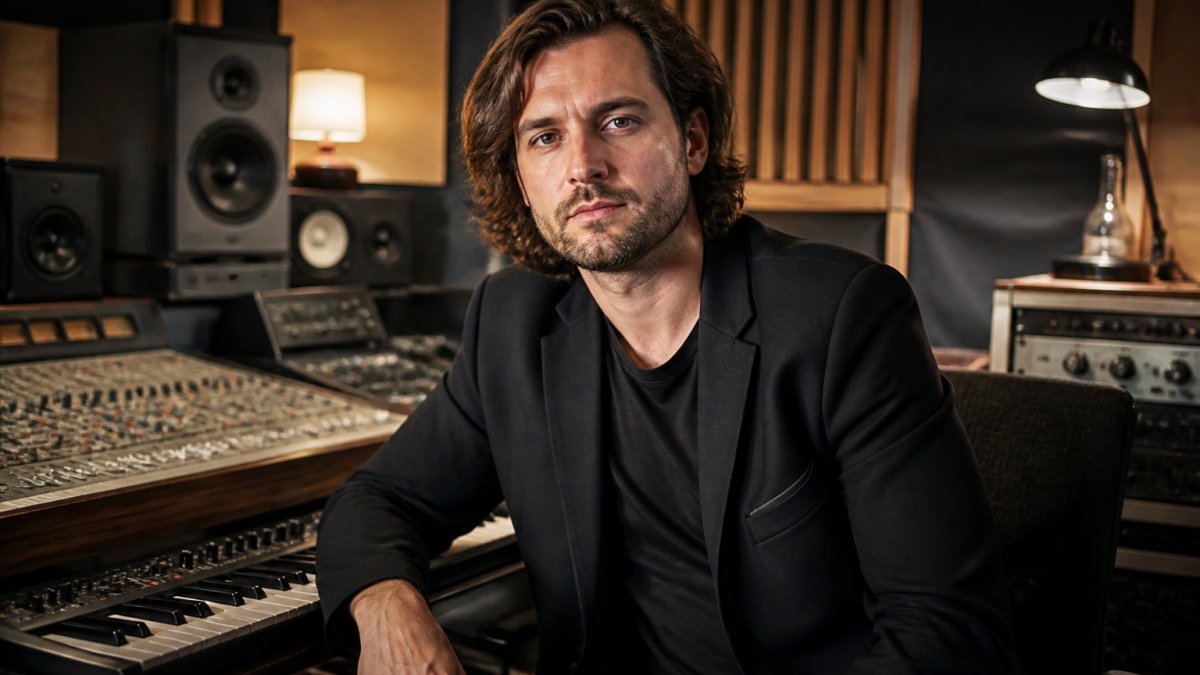
Consider your performance context. Will this photo appear on album covers, promotional materials, or venue websites? Will it represent you to labels, managers, or booking agents?
Authenticity matters more than perfection. A slightly imperfect but genuine smile beats a stiff, overly polished pose.
Professional Photographer vs. DIY and Smartphone Alternatives
Most articles conclude that a professional photo is beneficial and stop there. The real question is which option fits your situation: hire a professional, shoot it yourself with a smartphone, or generate one with AI. Each has a distinct trade-off profile.
The Four Dimensions That Actually Matter
When you compare options, judge them on four things, not one:
- Lighting control. This is the single biggest quality differentiator. A professional brings strobes, modifiers, and a controlled environment. A smartphone relies on whatever light is available. AI generates light that looks plausible but often slightly wrong, catchlights in the wrong position, shadows that don't match the source.
- Posing and expression coaching. Most people don't know what their best angle is. A photographer directs you in real time. A self-timer gives you trial and error. AI gives you a face that may not be yours.
- Consistency across platforms. If you need the same image to work on LinkedIn, a label one-sheet, a venue website, and a press kit, a professional session produces a coherent set. DIY and AI tend to produce one usable frame.
- Authenticity and trust. Recruiters, A&R reps, and booking agents increasingly recognize AI-generated headshots. A photo that doesn't match the person who shows up to the meeting erodes trust before the conversation starts.
Option-by-Option Breakdown
Professional photographer. Best for anyone whose image is a working asset, job seekers in competitive fields, musicians pitching to labels or venues, freelancers, consultants, and leaders.
Smartphone DIY. Best for early-career professionals testing the market, a placeholder while you save for a session, or a temporary update before a deadline.
AI-generated headshots. Best for people who need a polished image fast and accept the authenticity risk.
A Simple Decision Rule
Ask one question: Is your photo doing work for you, or just filling a slot?
- If it's filling a slot (you're not actively job searching, pitching, or networking), a good smartphone photo is enough. Spend your energy elsewhere.
- If it's doing work (recruiters are searching for you, you're pitching labels or venues, clients are vetting you), the professional session pays for itself in the quality and consistency of the asset.
What DIY Can't Replicate
Even a great smartphone photo has limits: it can't survive multiple crops without losing resolution, match studio lighting consistency, or give you the directed expression that makes a headshot feel alive rather than posed. Those aren't reasons to avoid DIY, they're reasons to know when DIY stops being enough.
Measuring ROI: Does Your New Headshot Actually Improve Results
Measuring headshot ROI requires tracking before and after metrics. Start by establishing your baseline.
Track these metrics for two weeks before updating your photo:
- Profile views per week
- Connection requests received
- Engagement on your posts
- Search appearances in recruiter searches (if available through LinkedIn)
Update your headshot. Then track the same metrics for two weeks after. Compare the data.
Most professionals see increases in profile views and connection requests within the first month of updating their headshot, though results vary by industry, role, and platform activity.
Indirect ROI is harder to measure but equally important: better visibility leads to more opportunities, which lead to better job offers, freelance work, or business relationships.
Cost-Benefit Framework by Career Stage and Budget
Most articles answer 'is it worth it?' with a blanket yes, which isn't useful if you're deciding whether to spend money you don't have. A better approach: match the investment to what your photo is actually doing for you right now.
The framework has two inputs, career stage and how actively your photo is working, and one output: whether to go professional, DIY, or wait.
The Two-Input Framework
Input 1: Career stage. Early career, mid-career, or established/leadership. This determines how much a strong visual first impression moves the needle relative to your other credentials.
Input 2: Photo activity. Is your photo passive (sitting on a profile you rarely update) or active (recruiters searching for you, you're pitching, networking, or publishing)? Passive photos have low stakes. Active photos compound.
Early Career and Job Seekers
When professional is worth it: You're actively applying, recruiters are searching your field, or you're in a competitive market where candidates look similar on paper.
When DIY is enough: You're still exploring, your profile is passive, or your budget is genuinely tight. A clean smartphone photo in good natural light is a legitimate placeholder, not a compromise you should feel bad about.
The upgrade trigger: The moment you start actively job searching or networking, upgrade. That's when the photo starts doing work.
Mid-Career Professionals and Entrepreneurs
When professional is worth it: Almost always, if your photo appears anywhere clients, partners, or recruiters will see it.
When DIY is enough: Rarely, and only if your photo is truly passive, for example, a profile you maintain but don't use for outreach.
The upgrade trigger: Any time you're pitching, publishing, or being searched for. For freelancers and consultants, the photo is a marketing asset, not a formality.
Executives and Industry Leaders
When professional is worth it: Always. At this level your photo appears in press materials, speaking bios, company pages, and industry publications. A weak image creates a mismatch between your role and your presentation.
When DIY is enough: Never, for public-facing use. The only exception is a private profile you don't use professionally.
The upgrade trigger: Any public appearance, publication, or leadership change.
A Budget-Conscious Path
If budget is the constraint, don't skip the photo, sequence it:
- Start with a strong smartphone photo. Natural light, clean background, a friend to shoot multiple frames. This costs nothing and beats a bad professional photo.
- Track your metrics for two weeks. Profile views, connection requests, search appearances. Establish a baseline.
- Upgrade when the data or your activity justifies it. If you're actively job searching, pitching, or networking, the professional session is the next logical spend.
- Reuse the asset. A single professional session produces crops for LinkedIn, a website, a press kit, and social profiles. The per-use value drops the more places you use it.
What This Framework Doesn't Cover
Two legitimate reasons to skip a photo entirely: privacy concerns and industries or regions where photos are less expected. If profile photos are uncommon in your field, or you have personal reasons to omit one, that's valid, a strong written profile can carry you. The framework above assumes you've decided to include a photo, not that you must.
Frequently Asked Questions
Does a professional LinkedIn headshot actually increase profile views and job opportunities?
Yes. Profiles with professional headshots receive significantly more recruiter attention and connection requests than those without photos. A clear, high-quality professional headshot signals career seriousness and approachability, making hiring professionals more likely to engage with your profile. The visibility boost varies by industry and role, but the credibility gain is consistent across sectors.
How should I prepare for a professional headshot session to get the best results?
Plan your wardrobe to align with your industry and personal brand at least a week ahead. Choose solid colors that complement your skin tone and avoid busy patterns. Get adequate sleep the night before, maintain your normal grooming routine, and arrive with a clear idea of the mood and style you want to convey. Discuss your LinkedIn goals and professional image with your photographer beforehand so they understand your vision.
Can a smartphone photo work as well as a professional headshot for LinkedIn?
Smartphone photos can work in a pinch, but professional headshots typically outperform them. Professional photographers control lighting, background, composition, and retouching to create polished images that build credibility. Smartphone photos often suffer from poor lighting, unflattering angles, or busy backgrounds. If budget is tight, a well-lit smartphone photo is better than no photo, but a professional headshot delivers measurably better first impressions and recruiter engagement.
How long should I expect a professional headshot session to take?
A typical professional headshot session runs 30 minutes to one hour, depending on the photographer and the number of outfit changes or variations you want. This timeframe includes setup, lighting adjustments, multiple takes to capture authentic expressions, and any minor wardrobe or hair adjustments. Discussing turnaround time and delivery expectations with your photographer beforehand helps you plan accordingly.