 How-to
How to Build a Musician Press Kit That Gets Booked
Last Updated: November 2, 2026
Quick Summary
A musician press kit needs six core assets: music samples, release information, video, press coverage, photos, and contact details. Lead with your strongest two or three tracks, include high-resolution credited press photos, and put a booking email and phone number on every page. Build one master folder, then reassemble a short lead section for each recipient.
- Write a 100 to 150 word third-person bio, plus a 50-word version for one-sheets.
- Keep the one-sheet to one page and export it as a PDF with a clean file name.
- Never set video to autoplay, and supply landscape and portrait crops of photos.
- Tailor exports per recipient: venues get live footage and draw numbers, press gets the angle and photos.
- Set a monthly reminder to check streaming links, socials, and photo credits.
Table of Contents
- What a Musician Press Kit Needs to Do
- The Core Assets Every Musician Press Kit Includes
- Prioritize Assets by What You're Asking For
- Technical Specs and Accessibility for Media Assets
- Rights, Consent, and What Not to Include
- Music Samples and Streaming Links
- Release Information, Album Artwork, and Lyrics
- Music Videos and Promotional Video
- Press Coverage, Reviews, and Press Clips
- Contact Information and Social Media Links
- Writing the Artist Bio for a Press Kit
- Band Press Photos: Specs, Rights, and Selection
- Using a Musician One-Sheet Template for Quick Pitches
- Music Press Kit Examples Worth Copying
- Tailoring Your Press Kit to Each Recipient
- Hosting, Link Maintenance, and Measuring Results
- Frequently Asked Questions
What a Musician Press Kit Needs to Do
A musician press kit is a single, shareable set of materials that lets a venue, label, journalist, or promoter judge your act in minutes.
That's the whole job. The format matters less than the speed of the answer.
Most kits fail for one boring reason. They make the reader work.
Below, we'll show you exactly what to include, what to leave out, and how to tailor the whole thing to whoever opens it.
The Core Assets Every Musician Press Kit Includes
Every kit needs six assets: music samples, release information, video, press coverage, photos, and contact details. Everything else is optional, but "optional" doesn't mean "skip it." It means the asset earns its place only when it serves the recipient.
Think of it as a digital music resume. The core stays stable; the extras change by recipient.
| Asset | Required? | Format | Why It Matters |
|---|---|---|---|
| Music samples | Required | Streaming link plus one downloadable track | Lets bookers hear you in one click |
| Release information | Required | Album or single title, date, credits | Shows you have a story to promote |
| Music video | Optional | One link, no autoplay | Proves the live and visual package |
| Press coverage | Situation-specific | Quotes plus links | Builds trust for larger rooms |
| Press photos | Required | High-resolution, credited | Used in listings and articles |
| Contact information | Required | Email, phone, socials | Removes friction from booking |
Prioritize Assets by What You're Asking For
Most guides list the same components and stop. The useful question is which assets to lead with depending on the ask. A common pattern among working acts:
- Booking a venue or festival slot: lead with live video, draw numbers (attendance at comparable rooms), and a direct booking contact. Studio tracks support the pitch but don't replace proof you can hold a room.
- Pitching press or a feature: lead with the angle, the bio, and downloadable high-resolution photos. A journalist needs a story hook and usable art more than a full catalog.
- Pitching a label or distributor: lead with catalog, streaming traction, and the story behind the current release. They are evaluating trajectory, not one night's bill.
Build one master folder, then assemble a short lead section per recipient. The master stays complete; the pitch stays focused.
Technical Specs and Accessibility for Media Assets
This is where most kits quietly fail. A promoter printing a listing or an editor dropping a photo into a layout needs files that behave.
- Images: supply high-resolution files suitable for print (long edge in the thousands of pixels, not a social-media export), plus landscape and portrait crops of the same shot. Provide color and black-and-white versions where you have them. Name files by act and photographer so they don't get lost in a downloads folder.
- Audio: a streaming link for quick listening plus one downloadable track for radio and press. Label each track with genre, tempo, and the closest reference point, that line saves the listener a guess.
- Video: one link, no autoplay. A video that ambushes the reader gets the tab closed.
Rights, Consent, and What Not to Include
Rights are the part nobody explains. Confirm in writing that you can license every photo for press and promo use, and always credit the photographer.
Keep private material out of publicly accessible kits: personal phone numbers you don't want scraped, home addresses, unreleased material you're not ready to share, and contact details for people who haven't agreed to be listed.
A kit is a public-facing document even when it's sent one-to-one. Treat every file in it as something that could be forwarded, screenshotted, or indexed.
Music Samples and Streaming Links
Lead with your strongest two or three tracks, not your whole catalog. A streaming link handles discovery; a downloadable file handles radio and press.
Label each track with one line: genre, tempo, and the closest reference point. That line saves the listener a guess.
Release Information, Album Artwork, and Lyrics
State what you're promoting right now. Include the release title, date, label or self-release status, and key credits.
Album artwork belongs here as a high-resolution file. Lyrics are optional, but they help journalists writing a feature.
Music Videos and Promotional Video
One video is enough. Pick the one that shows the live show or the strongest visual idea.
Never set it to autoplay. A video that ambushes the reader gets the tab closed.
Press Coverage, Reviews, and Press Clips
Pull the best three quotes and link to the full pieces. One strong review beats ten vague mentions.
Skip coverage that only repeats your own bio. It adds nothing a reader can't already see.
Contact Information and Social Media Links
Put a booking email and phone number on every page of the kit, not just the last one. Add social links, but keep them current.
A dead Instagram link reads as an inactive act. Check them monthly.
Writing the Artist Bio for a Press Kit
The strongest artist bio for press kit use is short, third person, and built on facts.
Open with what you sound like and where you're from. Then name the releases, the rooms you've played, and any coverage worth citing.
Cut the adjectives. "Soaring vocals" tells a promoter nothing.
Watch out: the most common mistake is a bio written in first person and stuffed with genre labels the act doesn't actually play.
Band Press Photos: Specs, Rights, and Selection
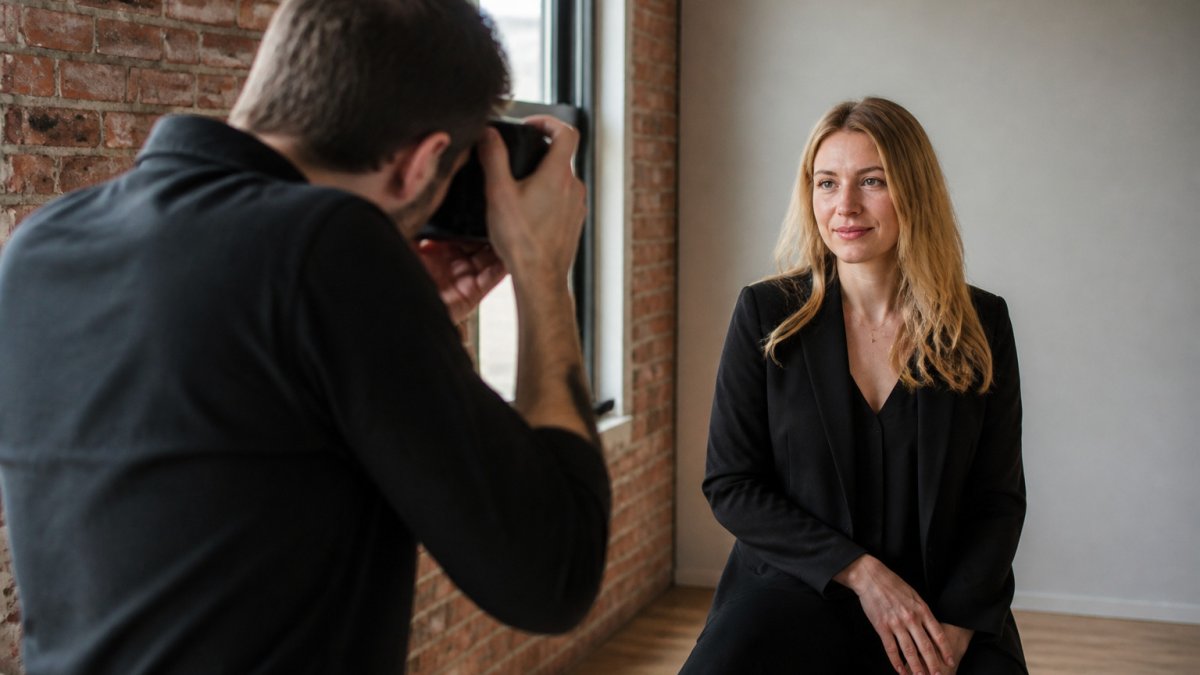
Good band press photos do one job: they look like the act sounds. If you're unsure what separates a usable image from a snapshot, read about the benefits of professional band photography for musicians. It also helps to follow a step-by-step plan for how to prepare for a band photoshoot so the shoot delivers what the kit needs.
Technical basics matter more than most acts realize:
- High resolution, suitable for print
- Landscape and portrait crops of the same shot
- Color and black-and-white versions
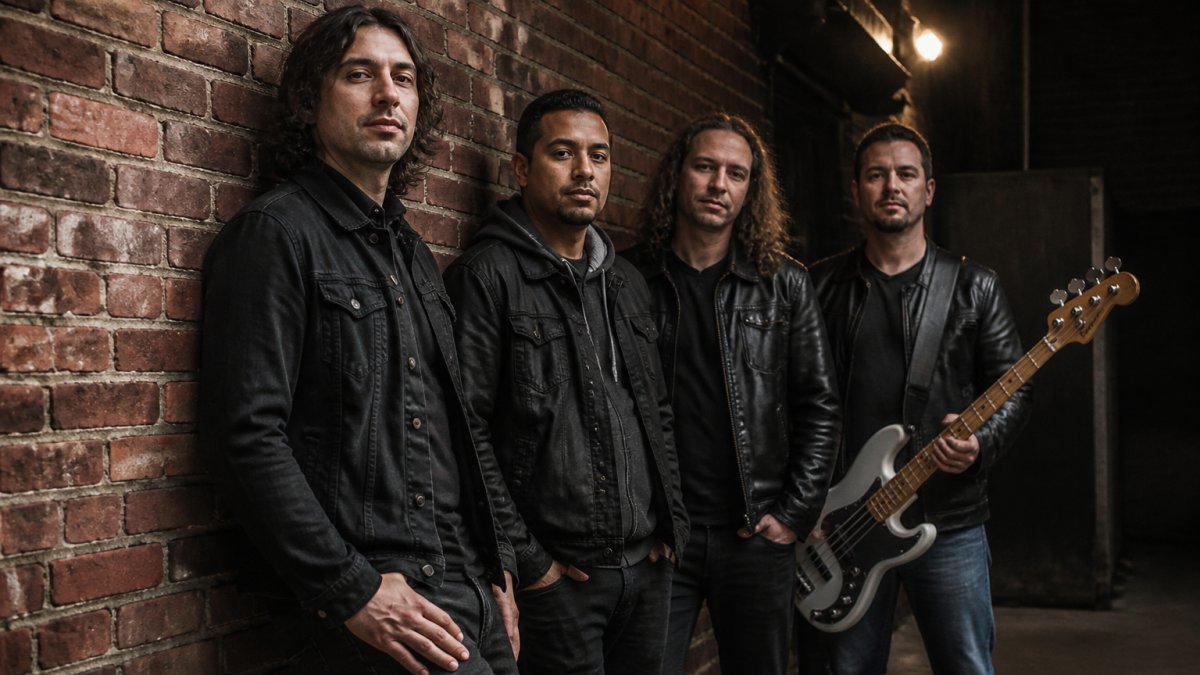
Rights are the part nobody explains. Confirm in writing that you can license the images for press and promo use, and always credit the photographer.
Using a Musician One-Sheet Template for Quick Pitches
A one-sheet is the one-page version of your kit, and it's what most bookers read first. Build yours in this order:
- Act name and one-line description
- Best photo, high resolution
- Three tracks or a single streaming link
- Two or three press quotes
- Recent shows and upcoming dates
- Booking contact
Keep it to one page. Export as a PDF with a clean file name.
The musician one-sheet template most acts should copy is plain: white background, readable type, no decorative borders. Fancy layouts break when a venue prints them in black and white.
Music Press Kit Examples Worth Copying
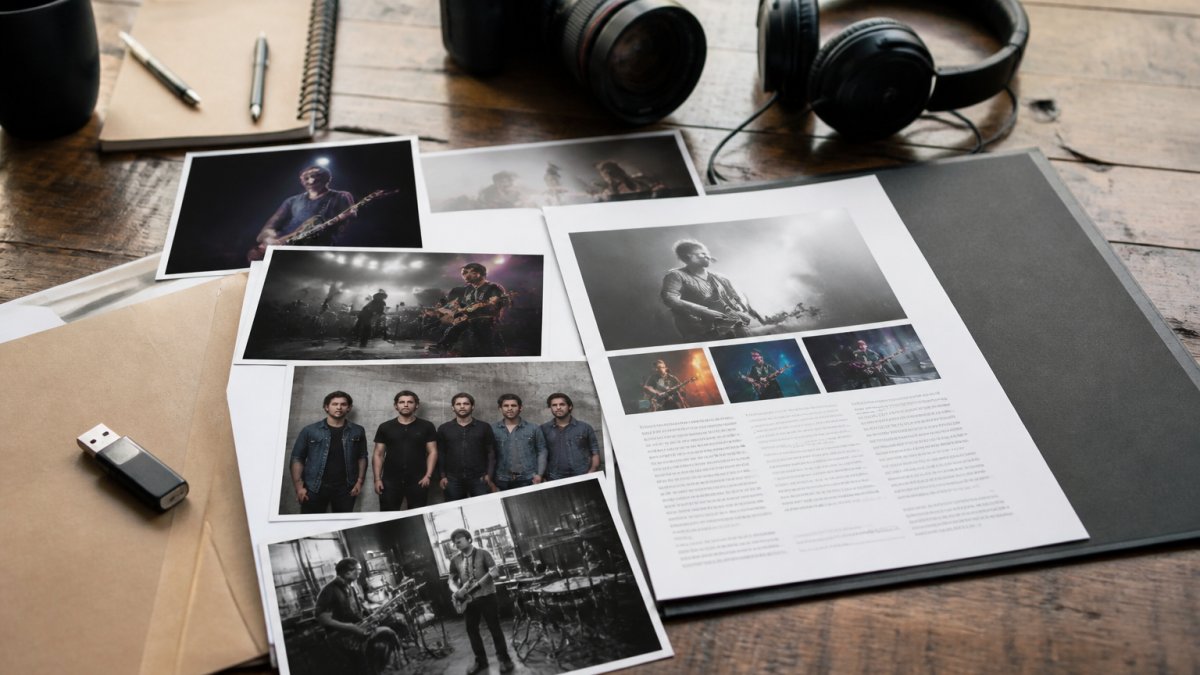
The best music press kit examples share one trait: they load fast and read in under two minutes. Look at how established touring acts structure theirs, then copy the structure, not the content. For a sense of the visual bar to aim for, browse this music gallery of concert and club photography.
What most guides miss is that the example kits winning bookings are rarely the prettiest. They're the most current.
Tailoring Your Press Kit to Each Recipient
The same kit should not go to a venue, a label, and a magazine. Each one reads for a different reason, and the fastest way to lose a reader is to hand them a document built for someone else.
Here's how the same master folder gets reassembled per recipient:
- Venues: lead with live footage, draw numbers, and a direct booking contact. The bio can be the 50-word version; the promoter wants to know what night you'll fill and who signs off. Pair it with guidance on how new bands find local venues to play.
- Festival bookers: lead with live video, a tight one-line description, and past billings at comparable events. They are slotting you against dozens of acts, so genre clarity and draw matter more than career history.
- Labels: lead with catalog, streaming traction, and the story behind the release. They are evaluating trajectory and whether there's a narrative to build on, so the longer bio and the release credits earn their place here.
A Worked Example: One Master, Three Exports
Take a four-piece with a new single, a handful of club shows, and one favorable review. The master folder holds the full bio, all photos, every track, and the review links. From it:
- The venue export opens with the live video, a line on attendance at comparable rooms, and the booking email, bio trimmed to 50 words.
- The press export opens with the single's angle, the 150-word bio, and a photo download link with credits, catalog trimmed to the two strongest tracks.
- The label export opens with the catalog, streaming numbers, and the release story, live footage moved to the back.
Same assets, three different front doors. The recipient never has to hunt for the thing they care about.
Keep the Bio and Links Consistent Across Versions
Tailoring is about emphasis, not contradiction. The act name, genre line, and contact details should read identically in every export, only the order and depth change. If a promoter and a journalist compare notes, they should recognize the same act.
Build one master folder, then export a tailored version per recipient. It takes minutes and changes the reply rate.
Hosting, Link Maintenance, and Measuring Results
Host the kit as a single PDF plus a folder of assets, and put both behind one short link.
Maintenance is where kits quietly die. Set a monthly reminder to check streaming links, socials, and photo credits.
Measuring results is simpler than it sounds. Track three things:
- Reply rate per recipient type
- Which asset gets opened or downloaded
- Bookings that trace back to the kit
If a recipient type never replies, the kit isn't the problem. When you're ready, tell me what you're making and book a photographer for ongoing press and promo images.
Frequently Asked Questions
What is typically included in a press kit?
A standard musician press kit holds a short artist bio, two to four high-resolution press photos, streaming and download links for music samples, release details with album artwork, any press coverage or reviews, a music video link, and clear contact information. Tour dates and social media links round it out. Everything should sit in one shareable link or folder so a promoter, label, or editor can open it in seconds without downloading files.
How many photos should a musician include in a press kit?
Two to four band press photos cover most situations. Include one wide group or full-body shot, one tighter portrait, and at least one live performance image. Deliver them at high resolution in both color and black and white, since magazines and venues often need either. Name the files clearly and add a photo credit line in your press kit so editors can attribute the image without emailing you back.
How long should a musician bio be in a press kit?
Write three versions of the artist bio for your press kit: a one-sentence tagline, a 100-word short bio, and a 250 to 300-word long bio. Promoters and venue listings usually take the short one, while magazines and labels read the long version. Keep the long bio focused on career history, notable shows, releases, and what makes the act distinct rather than a full life story.
Should a musician press kit include streaming links?
Yes. Promoters, editors, and label scouts expect to hear the music without hunting for it. Include direct streaming links plus a downloadable audio file or two for anyone who needs to work offline. Test every link before you send the kit and check them again before each pitch round, since a dead link is the fastest way to lose a booking or a feature.
Most acts treat the press kit as a one-time task, then wonder why it stops working. The kit is a living document: it needs current photos, working links, and a version tailored to whoever opens it. James DeSalvo Photography shoots the music, portrait, and editorial work that keeps those kits current, from live club sets to press portraits. Get started with James DeSalvo Photography and put images in front of bookers that match the sound.