 How-to
How to Choose a Branding Photographer for Your Band
Table of Contents
- Start With the Band's Visual Identity, Not the Portfolio
- What to Look for in a Branding Photographer's Portfolio
- Questions to Ask a Photographer Before Booking
- Your Band Photoshoot Planning Checklist
- How to Prepare for a Band Photoshoot
- Shooting for Professional Band Portraits for Social Media
- On the Day: Workflow, Contingencies, and Final Image Selection
- Frequently Asked Questions
Last Updated: October 17, 2026
Start With the Band's Visual Identity, Not the Portfolio
Before you open a single portfolio, write down who the band is. Choosing a branding photographer starts with your identity, not their gallery. A band photoshoot works when the images match the music, the story, and the audience you want to reach.
Here is how we at James DeSalvo Photography approach it: the photographer is a translator. They take your sound and turn it into a visual language. If that language is wrong, the photos fail no matter how sharp they are.
So answer these questions first:
- What three words describe your sound?
- What bands or artists do you get compared to?
- Are you selling grit, polish, mystery, or joy?
- Where will these images live: press kit, album cover, social media, or all three?
Most bands skip this step. They book whoever has the prettiest feed, then wonder why the shots feel like someone else's band.
Your visual identity is the brief. Everything else, from location to wardrobe, flows from it.
What to Look for in a Branding Photographer's Portfolio
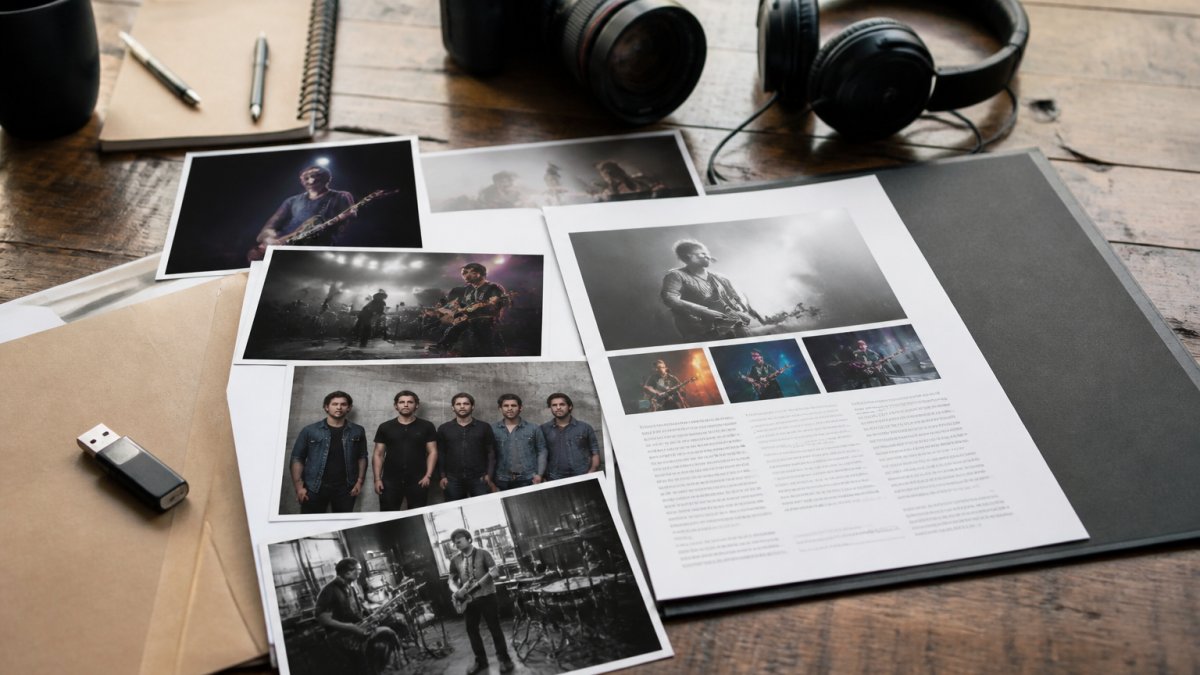
Look for a portfolio that shows range within music, not range across everything. A branding photographer who shoots weddings, food, and bands will rarely deliver the same focus as one who lives in the music world.
Scan for these signals:
- Consistent mood across different artists. If every band looks like the same band, the photographer has one trick.
- Real music clients. Press shots, album covers, and live music photography tell you they understand the industry.
- Control of light. Natural light and flash both matter. Look for clean shadows and faces that read clearly.
- Composition and camera angle. Low angle, group shot, and individual portrait variety show a working eye.
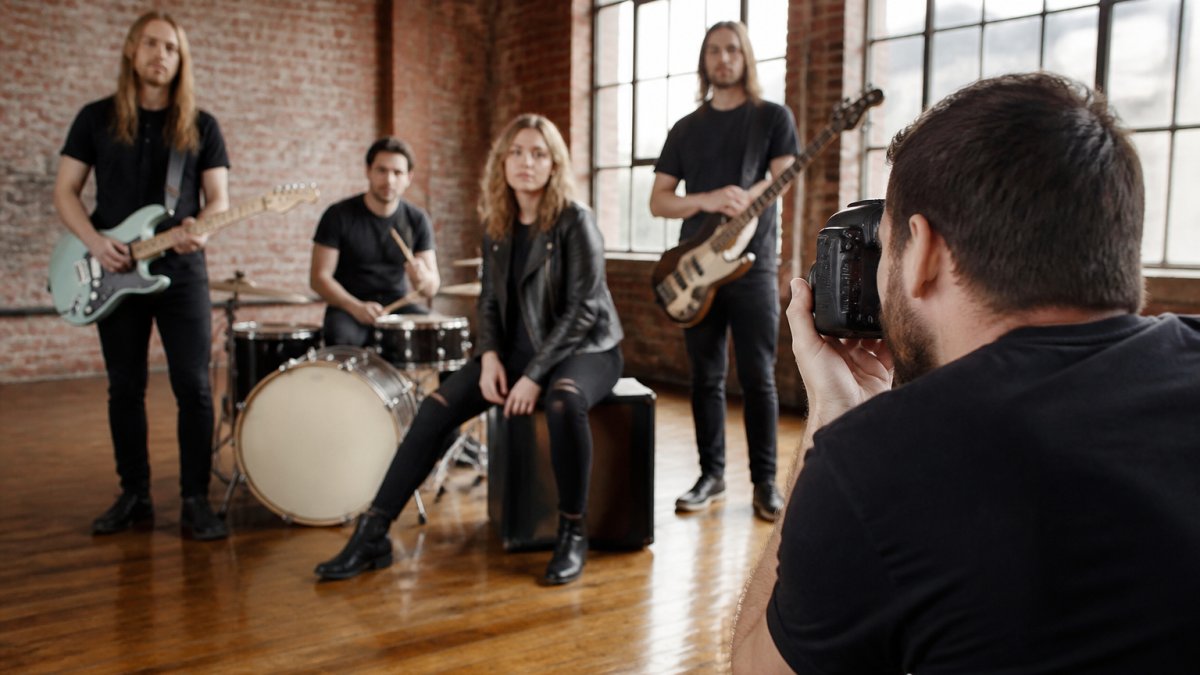
- How they handle a full band. Spacing, body language, and posture in group shots separate pros from hobbyists.
A common mistake is judging a photographer by one hero image. Ask to see a full set from a single session. That shows how they handle an entire shoot, not just the lucky frame.
Questions to Ask a Photographer Before Booking
The right questions to ask a photographer before booking are the ones that expose how they work, not just what they charge. A short call will tell you more than twenty emails.
Ask directly:
- Have you shot bands before, and can I see a full set?
- How do you handle creative direction when a band has no concept yet?
- What is your turnaround time from shoot to delivery?
- How many final images do we get, and who owns the rights?
- What happens if a member is sick or the weather turns?
- Do you shoot live music photography as well as studio work?
That last point matters. A photographer who shoots live shows understands stage energy and fast lenses. That skill carries into posed promo photos.
Pricing depends on session length, band size, and delivery. Ask for a written quote and confirm what it covers. We recommend getting that quote alongside the licensing terms so there are no surprises later.
Your Band Photoshoot Planning Checklist
A band photoshoot planning checklist keeps a chaotic day on track. Build it at least four to six weeks out so nothing gets rushed. The difference between a checklist that works and one that gets ignored is simple: every item needs an owner and a clear output, not just a date.
Use this as your working timeline, and assign one person to each line so decisions do not stall in the group chat:
- Six weeks out, Concept lock. Band and photographer agree on three mood words, two reference images, and the primary use of the shoot (press kit, album art, social, or all three). Owner: band point of contact. Output: a one-page brief.
- Five weeks out, Location and permits. Confirm the setting, check access times, and secure any permits or releases. Owner: photographer. Output: confirmed location with backup option.
- Four weeks out, Styling. Lock wardrobe, hair, and makeup for each member, including a spare outfit. Owner: band. Output: outfit list per person.
- Three weeks out, Props and transport. Gather instruments, stands, and personal props, and confirm who is driving what. Owner: band. Output: packing list and transport plan.
- Two weeks out, Shot list. Build the shot list with the photographer, including group formations, individual portraits, and detail shots. Owner: both. Output: final image plan.
- One week out, Call sheet. Send call times, location details, and the run of show to everyone. Owner: band point of contact. Output: shared call sheet.
- Day before, Pack and confirm. Charge gear, pack outfits, check the weather backup, and confirm the backup location. Owner: band and photographer. Output: packed bags and a confirmed plan B.
| Stage | Timing | Owner | Output |
|---|---|---|---|
| Concept | 6 weeks out | Band + photographer | Mood and direction |
| Location | 5 weeks out | Photographer | Confirmed setting and backup |
| Styling | 4 weeks out | Band | Wardrobe and looks |
| Props and transport | 3 weeks out | Band | Packing and transport plan |
| Shot list | 2 weeks out | Both | Final image plan |
| Call sheet | 1 week out | Band point of contact | Shared schedule |
| Delivery | Post-shoot | Photographer | Edited selects |
This is the part most guides miss. A checklist turns a vague idea into a plan the whole band can follow, and assigning owners stops the classic failure mode where everyone assumes someone else booked the location or packed the spare amp.
For larger bands, duos, or members with different comfort levels in front of a camera, add a line for a short pre-shoot conversation about poses and boundaries. That single item prevents the most common on-set delay: a member who freezes because nobody asked what they were comfortable with.
How to Prepare for a Band Photoshoot
Preparation separates a smooth shoot from a stressful one. To prepare for a band photoshoot, treat it like a gig: rehearse the looks, know the set list, and show up early.
Start with the band's image. Agree on a creative direction everyone can live with. Then break it down:
- Wardrobe: Pick outfits that fit the genre and avoid busy logos that date fast.
- Hair and makeup: Book a stylist if the budget allows, or agree on a simple, consistent look.
- Props and instruments: Bring the gear that belongs in the shot, plus a backup.
- References: Share a small folder of visual references so the photographer sees the mood you want.
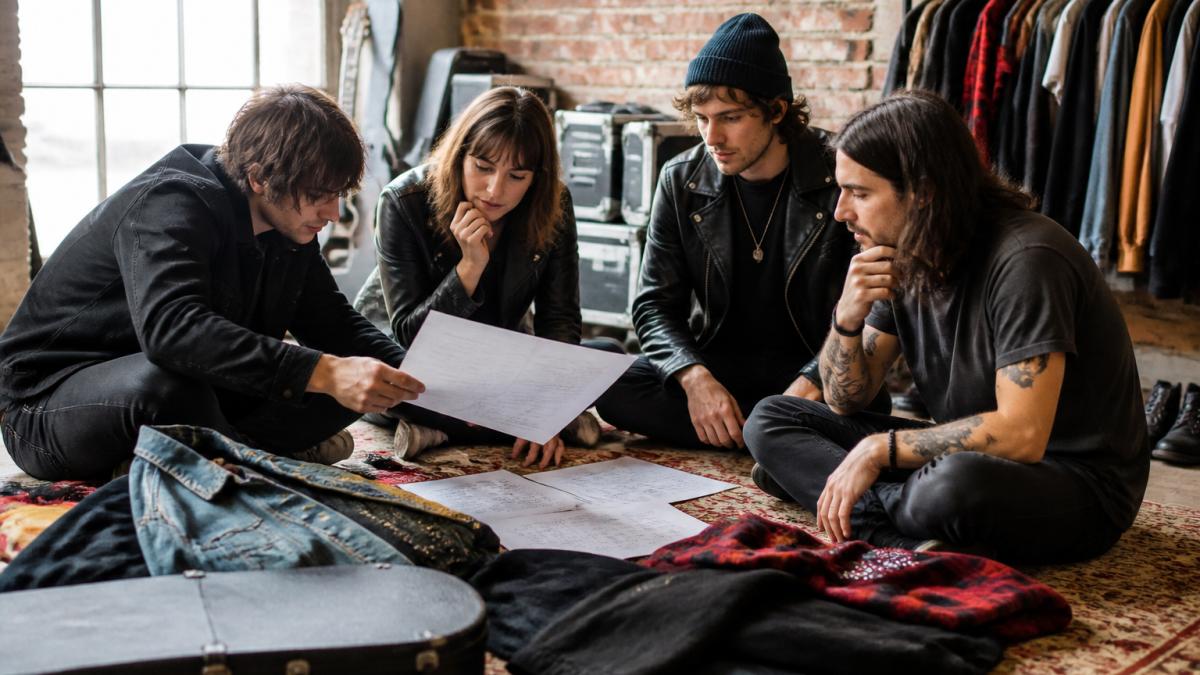
Shooting for Professional Band Portraits for Social Media
Professional band portraits for social media need to work small and fast. A fan scrolls past in a second, so the face and the mood have to land instantly. But the images also need to survive being cropped, compressed, and reused across a press kit, streaming profiles, and a website. That is where most bands get caught out.
Plan for the formats you actually use, and brief the photographer on them before the shoot:
- Square and vertical crops for feed posts and stories. Shoot with headroom so a vertical crop does not cut off a member's face.
- A clear group shot where every member is visible, with space at the edges so the image can be cropped to different aspect ratios without losing anyone.
- Individual portraits so each member has a usable headshot for their own profiles and the band's press page.
- A tight lead image for the press kit and streaming profiles, framed so it still reads at thumbnail size.
Think about composition and camera angle here. A low angle adds power. A wide group shot shows the whole lineup. Vary the pose and spacing so you have options, not ten versions of the same frame. A common pattern among experienced music photographers is to shoot a little wider than the final crop, which gives you room to reframe for each platform later.
Then there is the part most guides skip: image specifications and licensing. Ask the photographer for the file formats and resolutions you will actually need. Press kits and streaming profiles typically want high-resolution files, while social platforms compress images heavily, so a clean, well-lit frame matters more than a huge file.
The goal is a set of images that builds a visual identity across every platform. One shoot, many crops, consistent mood, and a clear agreement on where each image can live. That combination is what separates a professional band portrait set from a folder of nice photos.
On the Day: Workflow, Contingencies, and Final Image Selection
A good shoot day runs on a simple workflow and a backup plan. Arrive early, shoot the group shots first while energy is high, then move to individual portraits.
Here is how we would structure it:
- Quick huddle to confirm the shot list and mood.
- Group shots and band formation first.
- Individual portraits and detail shots.
- A short break, then any experimental poses.
Build in contingencies. Have an indoor backup for outdoor locations. Keep a spare outfit and a backup instrument. If a member is running late, shoot the others first.
Then comes selection. Ask the photographer for a contact sheet of the best frames. Choose images as a band, not alone, and judge them against the original brief. The U.S. Copyright Office guidance on photography ownership is worth reading before you assume you can reuse images freely.
For bands working with a limited budget, a DIY shoot is possible. But the BBC's advice on building a music brand makes the case that a strong, consistent image pays off over time, which is why hiring a specialist often beats cutting corners.
The hardest part of a band photoshoot is not the camera. We build music industry photography around your creative direction, with professional band portraits, live music coverage, and image sets made for publicity and promotion.
Frequently Asked Questions
What should I look for in a branding photographer for my band?
Look for a portfolio that shows full band lineups, not just solo portraits, and check whether the images feel like the music you make. Ask about their experience with promo photos, press shots, and album cover work. Confirm they can handle group lighting and spacing for your band size, and that they understand how images will be used across social media, publicity, and streaming profiles. A short call or portfolio review tells you more than a rate sheet.
How is a branding shoot different from a standard band press shoot?
A press shoot usually produces a small set of images for publicity and editorial use. Branding photography builds a wider library: individual portrait, group shot, and detail images sized for social media, album cover concepts, and promotional material. The planning is heavier, with a shot list, wardrobe direction, and a defined mood, so you leave with a consistent visual identity rather than a handful of usable frames.
What should we avoid before a band photoshoot?
Avoid booking a shoot before the band agrees on a creative concept, since conflicting ideas show up in body language and styling. Skip new haircuts or unfamiliar makeup on the day, and don't leave wardrobe decisions to the morning of the shoot. Confirm location access and parking in advance. Also avoid over-scheduling: a rushed session limits how many setups the photographer can complete.
How many photos should we expect and how fast is delivery?
The number of final images depends on band size, the number of setups, and how the shoot is scoped, so ask for a delivery estimate in writing before booking. Turnaround also varies by photographer and workload. Ask when proofs will be ready, how selections are made, and whether retouching is included. For time-sensitive releases or press deadlines, confirm the schedule upfront and agree on file formats and usage rights.