 how-to
How to Find Local Event Photographers: A 2026 Guide
Table of Contents
- Start Your Search: How to Find Local Event Photographers by City and Region
- How to Choose an Event Photographer: A Step-by-Step Vetting Process
- Questions to Ask an Event Photographer Before You Book
- Building an Event Photography Shot List Template for Your Event
- Comparing Quotes and Packages: A Cost Framework for Event Coverage
- Red Flags and Contingency Planning: What to Avoid When Booking
- Conclusion: Booking with Confidence
- Frequently Asked Questions
Last Updated: October 5, 2026
Start Your Search: How to Find Local Event Photographers by City and Region
Finding local event photographers starts with knowing where to look: directories, community recommendations, and smart search habits.
At James DeSalvo Photography, we work with musicians, promoters, and labels who book photographers for concerts and showcases. The process below reflects how the hiring side vets photographers.
Start with three channels:
- Directories and marketplaces that list photographers by city and specialty
- Community recommendations from venues, planners, and other bands
- Search engines using location-specific queries
Each surfaces different names, so use all three before you shortlist anyone.
Where to Look: Directories, Marketplaces, and Community Recommendations
Directories give you volume; community gives you trust. Search directories by city, region, and event type for listings with a portfolio, reviews, and a clear booking process, then cross-check those names against recommendations from people who have hired photographers before.
- Ask venue managers who they see working events
- Check local music and lifestyle magazines for photo credits
- Post in band and promoter groups asking for recent experiences
A photographer who appears in both a directory and a personal recommendation is worth a closer look.
Using 'Event Photographer Near Me' Searches Effectively
An "event photographer near me" search only works if you add context.
Try searches like:
- "concert photographer [your city]"
- "corporate event photographer [your region]"
- "festival photography [your city] 2026"
Add the event type, city, and year, then check whether the top results' portfolios match your event. A wedding photographer may not handle a live concert well, and vice versa.
Google's guidance on how local search results are ranked
How to Choose an Event Photographer: A Step-by-Step Vetting Process
Choosing an event photographer means verifying three things: portfolio fit, client feedback, and booking reliability.
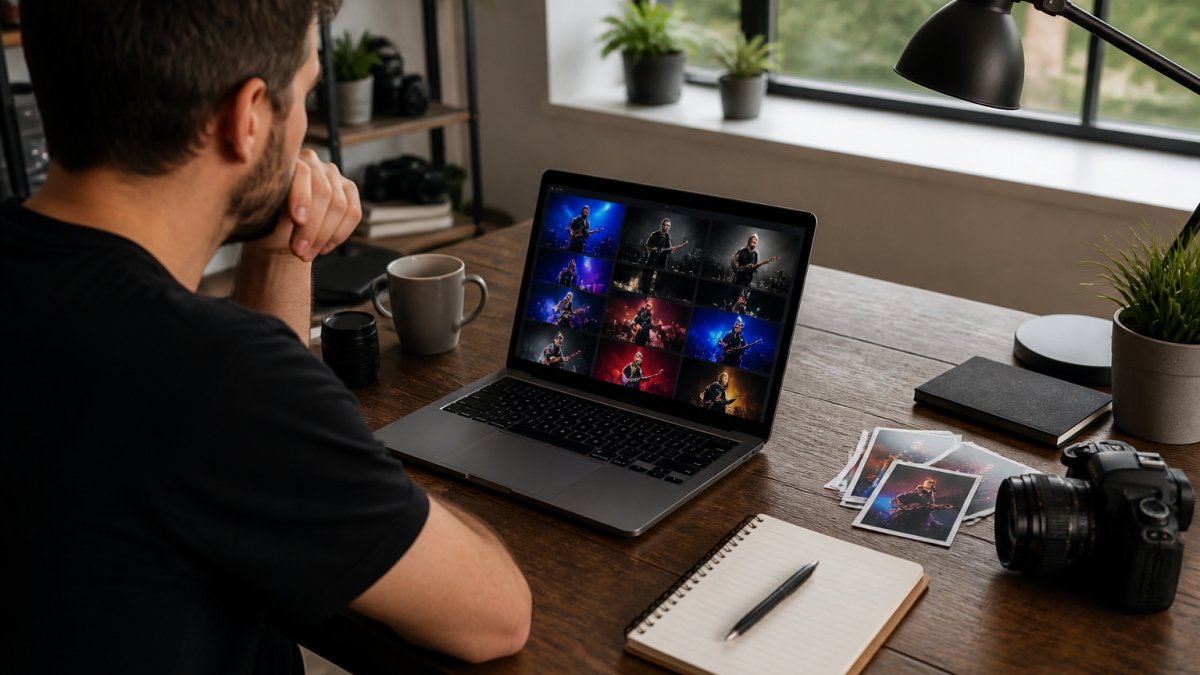
Here is the vetting process we would follow:
- Build a shortlist of five to eight names
- Review each portfolio against your event type
- Read client reviews and ratings
- Check availability for your date and time
- Request a quote and compare packages
- Ask your questions before you commit
Work through the list in order and drop anyone who fails at step two or three.
Evaluating Portfolios for Your Specific Event Type
A portfolio tells you more than any sales pitch. Look for images from events like yours.
For a live concert, check how the photographer handles low light, motion, and crowd energy.
Ask yourself:
- Do the images show the event type I am planning?
- Is the lighting and mood consistent?
- Are the subjects sharp and well framed?
- Does the style match what I want to promote?
If there are no images from your event type, ask for samples. A confident photographer will have them.
How to Read a Portfolio Like a Hiring Manager
The useful skill is knowing what to look for in a portfolio in the first thirty seconds.
Start with consistency: a strong portfolio shows a recognizable look across many events, not one lucky frame.
Then check the hard conditions. Low-light concert work, fast motion, and crowded rooms are where weak portfolios fall apart.
Finally, look for moments that are hard to stage: a fan's reaction, a band huddle before the set, a speaker's unguarded expression.
Checking Reviews, Ratings, and Customer Feedback
Client reviews reveal how a photographer behaves under pressure. Read the written feedback, not just the star count, for comments about response time, professionalism, and whether the final images matched expectations. A photographer with a few detailed, positive reviews is often safer than one with many vague ratings.
- Check reviews on more than one platform
- Look for feedback from the last 12 months
- Note how the photographer replies to criticism
- Ask for a reference from a recent client
A Booking-Risk Checklist Before You Commit
Portfolio and reviews get you to the shortlist. The final decision comes down to how the photographer handles what goes wrong:
- Backup gear. Ask what happens if a camera body or lens fails mid-event. A professional carries a second body and spare cards.
- Backup person. Ask whether a second shooter or a trusted substitute is available if the lead photographer is ill or delayed.
- Venue access. Confirm the photographer has worked in similar venues and knows the load-in, lighting, and crowd-flow constraints.
- Insurance and liability. Many venues require proof of liability coverage before a photographer can work. Ask whether the photographer carries it and can provide a certificate.
A photographer who answers these without hesitation has done this many times. One who deflects is a risk.
Questions to Ask an Event Photographer Before You Book
The right questions protect your budget and your event. Ask them before you commit and write the answers down so you can compare providers fairly.
Availability, Booking Process, and Response Time
Confirm the date, time, and location first, then ask how the booking process works.
- Is my date and time available?
- How do I confirm the booking?
- What deposit do you require, and when is the balance due?
- How quickly do you reply to messages?
Response time is a strong signal. A photographer who takes days to answer a simple question may do the same when you need edits fast.
Contracts, Image Rights, and Deliverables
A written contract protects both sides. Never book without one. Ask what it covers:
- Number of edited images delivered
- Delivery format and resolution
- Turnaround time from shoot to delivery
- Who owns the image rights and how you can use them
For music clients, image rights matter: you may want photos for album art, press kits, or promotion. Get usage terms in writing.
U.S. Copyright Office guidance on image rights and ownership
Building an Event Photography Shot List Template for Your Event
An event photography shot list template keeps the shoot focused and prevents missed moments. Share it beforehand:
- Venue exterior and signage
- Wide shot of the full crowd or room
- Main performer or speaker, close up
- Candid shots of guests or fans
Adapt the list to your event type: a festival needs crowd and stage shots, a corporate event needs speaker and networking images. Send it at least a week ahead so the photographer can plan.
Comparing Quotes and Packages: A Cost Framework for Event Coverage
Comparing quotes is easier when you break each into the same categories, price alone hides the real differences:
| Category | What to Check | Why It Matters |
|---|---|---|
| Coverage hours | Hours included, overtime rate | Long events need enough coverage |
| Deliverables | Number of edited images | Fewer images may mean less choice |
| Turnaround | Days from shoot to delivery | Fast timelines cost more |
| Image rights | Usage terms in the contract | Affects promotion and press use |
| Travel | Distance and any travel terms | Out-of-city events add cost |
| Backup plan | Second shooter or backup gear | Protects against a single failure |
Ask each provider for a written quote using these categories. Then compare like for like.
How to Normalize Quotes So You Compare Apples to Apples
Quotes arrive in different shapes: a flat rate, an hourly rate plus add-ons, or a bundled package.
Write the categories down the left of a page and the photographers across the top, filling in what each quote includes.
Watch for these common mismatches:
- One quote includes a second shooter; another charges extra for one
- One includes edited images; another delivers unedited files and charges for retouching
- One includes travel within a radius; another adds a per-mile or per-hour travel line
- One includes a usage license for promotion; another limits use to personal sharing only
Once the grid is filled, the cheapest quote often stops looking cheapest. The real comparison is total coverage, deliverables, and rights, not the headline number.
What Actually Drives an Event Photography Quote
Most quotes move on a handful of variables. Understanding them helps you ask better questions and spot padding.
- Coverage length. Longer events mean more shooting time, more images to cull, and more editing hours.
- Event type and complexity. A single-stage concert is simpler than a multi-room festival with simultaneous performances.
- Deliverable volume. A tight set of hero images costs less to produce than a full gallery of hundreds of edits.
- Turnaround speed. Next-day delivery requires prioritizing your event over others.
- Usage rights. Broad commercial rights, such as album art or paid advertising, typically carry a higher license than editorial or personal use.
When a quote seems high, ask which variable is driving it; when it seems low, ask which is missing.
Questions That Reveal Hidden Costs
Before you sign, ask each provider:
- What is the overtime rate if the event runs long?
- Is there a minimum booking window?
- Are there additional fees for a second location or a second shooter?
- What is the policy if the event is postponed or cancelled?
- Does the quote include a usage license, and for how long?
Get the answers in writing, a quote covering only the shoot day is not the same as one covering the full scope.
Pricing depends on coverage length, event type, deliverables, and turnaround. Contact James DeSalvo Photography for current rates and availability.
Red Flags and Contingency Planning: What to Avoid When Booking
Most bad bookings share the same warning signs. Spot them early:
- No written contract or vague terms
- No portfolio images from your event type
- Slow or evasive answers to simple questions
- Pressure to pay in full upfront
- No clear delivery date or image count
Plan for the unexpected too. Ask what happens if the photographer gets sick or equipment fails. A professional will have a second shooter or backup gear ready.
- Confirm a backup contact
- Agree on a delivery deadline in writing
- Keep copies of all messages and the contract
- Share your shot list and timeline in advance
Conclusion: Booking with Confidence
Finding the right event photographer takes a little work, but the process is simple: search widely, vet carefully, and put the terms in writing.
If you need a photographer for a concert, showcase, or festival, James DeSalvo Photography specializes in music industry photography for musicians, bands, managers, labels, and magazine editors. We help performers and promoters get images that work for press, promotion, and venues.
Frequently Asked Questions
How much should a photographer charge for an event?
Event photography pricing depends on several factors: the length of coverage, the number of photographers needed, the event type (concert, festival), image usage rights, and turnaround time. Rather than quoting a single rate, ask for a detailed quote that breaks down hourly coverage, editing, and deliverables. James DeSalvo Photography recommends contacting the business directly for current pricing and availability based on your specific event needs.
How do I choose the right event photographer for my concert or festival?
Start by reviewing portfolios that specifically feature live music events, not just general event work. Look for images that capture stage lighting, crowd energy, and artist expressions. Check reviews from other musicians or promoters. Ask about their experience with your venue type and whether they have backup equipment. Finally, request a shot list discussion before booking to ensure they understand your must-have moments.
What should I look for in an event photographer's portfolio?
Focus on three things: technical consistency (sharp focus, correct exposure in challenging lighting), emotional resonance (do the images tell a story?), and relevance to your event type. If you are booking for a concert, look for concert images. A portfolio should show variety but also depth in your specific event category.
How far in advance should I book an event photographer?
For major events like festivals or concerts, book at least two to three months in advance. However, popular photographers book quickly during peak seasons. If your event falls on a holiday or weekend, start your search even earlier. Always confirm availability before finalizing your event date.