 Comparison
Is Booking a Venue Through an Agency Worth It?
Last Updated: November 4, 2026
Quick Summary
Whether is booking a venue through an agency worth it depends on the search being your bottleneck: hire one for multi-city runs or rooms you have no route into, and book direct when you know the venue or the date is flexible. Compare written quotes, not fee models alone.
- A venue booking agency researches venues, checks availability, negotiates terms and coordinates the booking on your behalf.
- A venue-finding agency serves the event organizer, while a booking agent represents the artist.
- Ask who pays the agent's fee before discussing anything else, and get it in writing.
- Read the cancellation clause first, checking deposit terms, cancellation windows and liability in both documents.
- An agency that only presents its own preferred rooms is giving you a sales list, not a shortlist.
Table of Contents
- What a Venue Booking Agency Actually Does for You
- Booking Agent vs Booking Directly: The Real Trade-Offs
- How to Find Venues for Live Music Without an Agency
- A Venue Booking Email Template for Musicians
- Questions to Ask a Music Booking Agent Before You Sign
- Agency Fees, Commissions, and Total-Cost Comparison
- Contract, Cancellation, and Liability Terms to Check
- Deciding Whether to Hire a Venue Booking Agency
- Frequently Asked Questions
What a Venue Booking Agency Actually Does for You
Whether booking a venue through an agency is worth it depends on what you expect the agency to take off your plate.
The job breaks down into four parts:
- Venue search and shortlisting against your date, capacity and budget
- Availability checks across several rooms at once
- Negotiation on rate, inclusions and hold dates
- Coordination with the venue coordinator through to contract
A key distinction is between a venue-finding agency and a booking agent. A venue-finding agency serves the event organizer, while a booking agent represents the artist. Their payment structures can differ, so confirm who pays whom before you engage either one.

Booking Agent vs Booking Directly: The Real Trade-Offs
Booking direct puts you in the room with the venue contact, and that is often the fastest route when you already know the room.
An agency trades that time for a fee and for access. Agencies that work a circuit regularly know which rooms have holds, which promoters answer quickly and which venues are flexible on a midweek date.
The honest trade-off looks like this:
| Factor | Booking Direct | Through an Agency |
|---|---|---|
| Control over negotiation | Full | Shared with the agent |
| Time spent on research | High | Low |
| Access to held or unlisted dates | Limited | Often better |
| Cost visibility | Clear | Depends on the fee model |
| Relationship with venue staff | Built by you | Built by the agent |
A common mistake is assuming an agency always gets a better rate. It can beat a first-time caller, because the venue knows the agency will bring repeat business. It rarely beats a promoter who has run the same room for years.
How to Find Venues for Live Music Without an Agency
Start with the rooms your audience already attends, not with a search engine. A venue that already hosts acts in your genre has a proven audience, a working sound system and staff who know how to run a show. Those three things matter more than capacity.
A practical search order:
- List every venue within reach that books your genre
- Note which nights they run live music and who promotes them
- Check past lineups to see the size of act they usually book
- Find the named contact, not the general inbox
- Approach with a specific date and a specific ask
If you are starting from zero, how new bands find local venues to play walks through the process in more detail.
Watch out: sending a generic message to ten venues at once reads as exactly that. Venue coordinators talk to each other, and a mass mail with no date and no detail usually gets filed and forgotten.
A Venue Booking Email Template for Musicians
A booking email should do one job: make it easy for the venue contact to say yes or no.
Subject: [Band name] - [genre] - [specific date] - [city]
Hi [name],
I'm [your name], booking for [band name].
Two details make this work: the date sits in the subject line so the venue can triage it in seconds, and the draw figure is honest. Inflating it is the fastest way to lose a room for good.
If you are building the materials to attach, see a musician press kit that gets booked.
Questions to Ask a Music Booking Agent Before You Sign
Ask what the agent is paid and who pays them before you discuss anything else. That single answer tells you whose interests the agent is set up to protect.
The questions worth asking:
- Who pays your fee, us or the venue? A venue-paid commission means the agent is not costing you cash, but it may also mean the agent is incented toward the venue's preferred rooms.
- Is the fee a percentage or a flat retainer? Percentages scale with the deal; retainers are owed whether or not you book.
- Which venues have you booked in the last twelve months? Ask for names, then check them.
- What happens if we cancel? Get the answer in writing.
- Who holds the contract, us or you? You want to be the contracting party wherever possible.
- What do you need from us, and by when? A good agent will have a clear list.
A useful filter: an agent who answers the fee question vaguely is telling you something. Push once, politely, and see whether a straight answer follows.
Agency Fees, Commissions, and Total-Cost Comparison
Agency fees can come in several shapes, and they are not equivalent. Comparing headline percentages without comparing what each one covers can lead to a misleading cost analysis.
| Fee Model | How It Works | Watch For |
|---|---|---|
| Venue-paid commission | Venue pays the agency a percentage of the hire | Commission may steer the shortlist |
| Client-paid percentage | You pay a percentage of the total booking | Percentage applies to add-ons too |
| Flat retainer | Fixed fee regardless of outcome | Owed even if nothing is booked |
In some arrangements the venue pays the agency from its published rate, so booking direct will not automatically produce a lower quote.
A worked like-for-like comparison is the only way to see the real difference. Build one sheet with these rows for each route, and fill it from written quotes rather than verbal estimates:
- Venue hire or minimum spend: the guaranteed amount the venue collects, whether from you or from ticket sales
- Service charges and taxes: often quoted separately and easy to omit from a headline figure
- Inclusions: sound system, engineer, door staff, green room, load-in access and curfew
- Agency compensation: commission, client fee or retainer, stated as a line item
- Your own hours: research, site visits, follow-up and contract review, valued at your normal rate
- Contingency: the cost of a rebook or a lost deposit if terms go wrong
The agency route can look more expensive on the fee line and roughly level on the total, depending on the research hours and inclusions involved.
We would not recommend choosing on fee alone.
Contract, Cancellation, and Liability Terms to Check
Read the cancellation clause before anything else, because that is where the money sits when a date falls through. Venue contracts can cover deposit terms, cancellation windows and liability for damage or injury. Agency agreements can change who is exposed.
Check these in both documents:
- Deposit terms: how much, when it falls due, and whether it is refundable
- Cancellation windows: what you owe at 90, 30 and 7 days out
- Force majeure: what counts, and who decides
- Liability and insurance: who is covered for what on the night
- Assignment: whether the agency can transfer the booking
Watch out: an agency agreement that lets the agent sign on your behalf without a cap on liability can leave you exposed to terms you never read. Ask for the venue contract to come to you before signature, every time.
Deciding Whether to Hire a Venue Booking Agency
Hire an agency when the search itself is the bottleneck: multiple dates, several cities, or a room you have no route into.
Work through the decision in this order:
- How many venues and dates are in scope? One room on one date is a direct booking. Several rooms in one city is still usually direct, with a shortlist and a written brief. A multi-city run, a tour, or a date in a city where you have no contacts is where an agency starts to earn its fee.
- How complex is the event? A club show with a house sound system and a standard door deal is simple. A showcase with multiple acts, production riders, guest lists and a curfew is more complex, and complexity is what agencies are built to absorb.
- What is your planning capacity? If you have a manager, promoter or coordinator with hours to spend on research and follow-up, direct booking keeps control and cost visibility. If the search is competing with your actual job, the agency's fee buys back time.
- How much does access matter? Some rooms hold dates for regular promoters and agencies and do not publish availability. If the venues you want are in that category, an agency with an existing relationship may be the only practical route in.
- What is your risk tolerance on contracts? If you are not confident reading cancellation, liability and assignment clauses, an agency that reviews them is worth considering, provided you still see the venue contract before signature.
A simple decision test by event type:
- One room, one date, existing contact: book direct.
- One city, several rooms to compare: direct, with a shortlist and a clear brief.
- Multi-city run or a venue with no public contact: an agency earns its fee.
- Corporate or private event with vendor coordination: an agency is usually the safer route.
- Festival or showcase with multiple stages and production riders: an agency or an experienced promoter, because the coordination load is high and the contract risk is real.
A decision framework only helps if the agency is the right one, so verify before you commit.
Watch out: an agency that cannot tell you who holds the contract, who pays the deposit and who carries liability on the night has not thought through the part of the job that matters when something goes wrong.
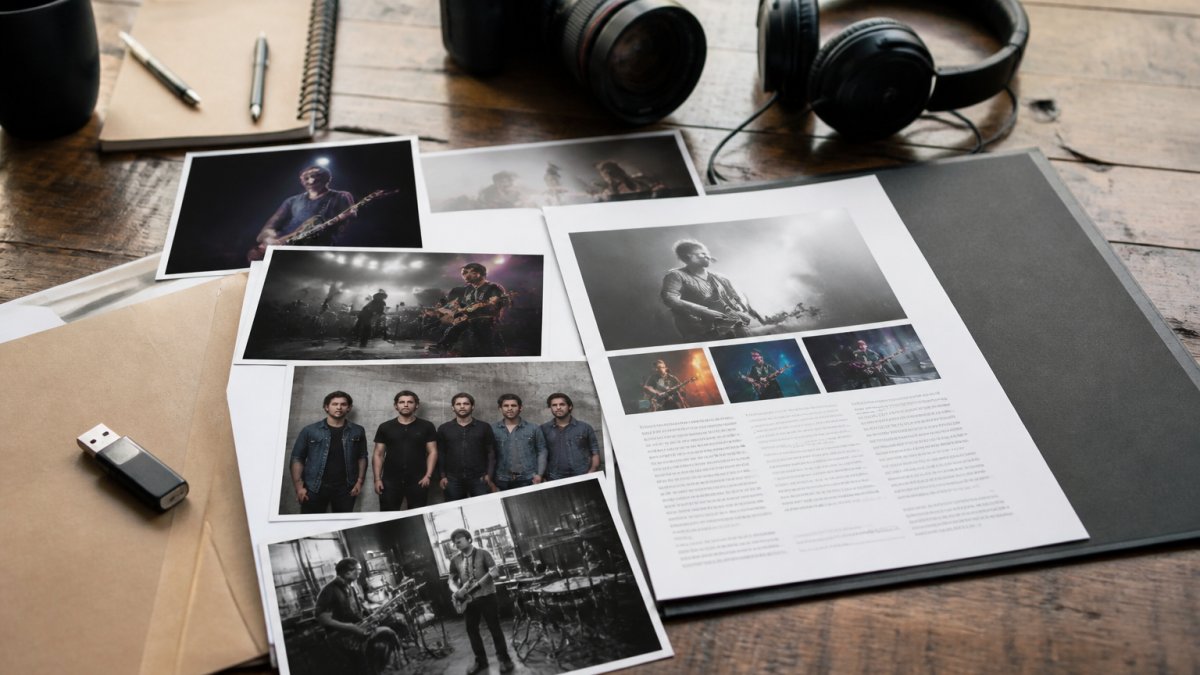
If you decide to bring in help, our music and portrait photography booking page is where to start that conversation. For examples of live music photography, see the music gallery.
Frequently Asked Questions
How much does a booking agency charge?
Most venue booking agencies earn through commission, either added to the venue hire cost or paid by the venue out of its own budget, and some charge a flat planning fee instead. The structure varies widely, so ask for the fee model in writing before you commit. Compare the total event cost with and without the agency, including vendor coordination and staff time, rather than looking at the commission line alone.
Is booking a music venue through an agency worth it for an independent artist?
It depends on your contacts and how much time you can spare. A venue booking agency earns its keep when it opens rooms you cannot reach, handles negotiation, and takes coordination off your plate. If you already have relationships with local venues and a clear pitch, direct booking keeps you in control of the relationship and the terms. Many independent artists start direct and bring in an agency once touring logistics outgrow what they can manage alone.
What should a band ask a booking agency before working with them?
Ask how they are paid, whether commission comes from the venue or from you, which venues they have real relationships with, and what happens if a date is cancelled. Request references from artists at your level and confirm who handles contracts, deposits, and day-of coordination. Also ask whether they will represent you exclusively and what notice period applies if you want to leave.
How can a band tell whether a booking agency is legitimate?
Check that the agency can name specific venues and past shows, provides written terms, and will connect you with artists they have worked with. Be cautious of anyone asking for large upfront payments before any work is done, or who cannot explain their commission structure clearly. A legitimate agency is comfortable answering questions about contracts, cancellation policies, and who holds the deposit.
The real question is not whether agencies charge a fee, but whether the time and access they return are worth more than that fee for your specific run of dates. James DeSalvo Photography works with artists, managers and promoters on music industry photography, including live show coverage and promotional portraits, and we are glad to talk through what a booking looks like from the venue side. Get started with James DeSalvo Photography and put a proper visual record behind your next booking.