 How-to
How to Assess Photographer Portfolio Quality: 2026 Guide
Table of Contents
- Start With a Scoring Rubric, Not a Gut Feeling
- The Photography Portfolio Checklist for Technical Quality
- Read Photographer Portfolio Examples Like an Editor
- Review the Full Gallery, Not the Highlight Reel
- What a Band Photography Portfolio Must Prove
- How to Choose a Music Photographer for Your Brief
- Frequently Asked Questions
Last Updated: October 19, 2026
Start With a Scoring Rubric, Not a Gut Feeling
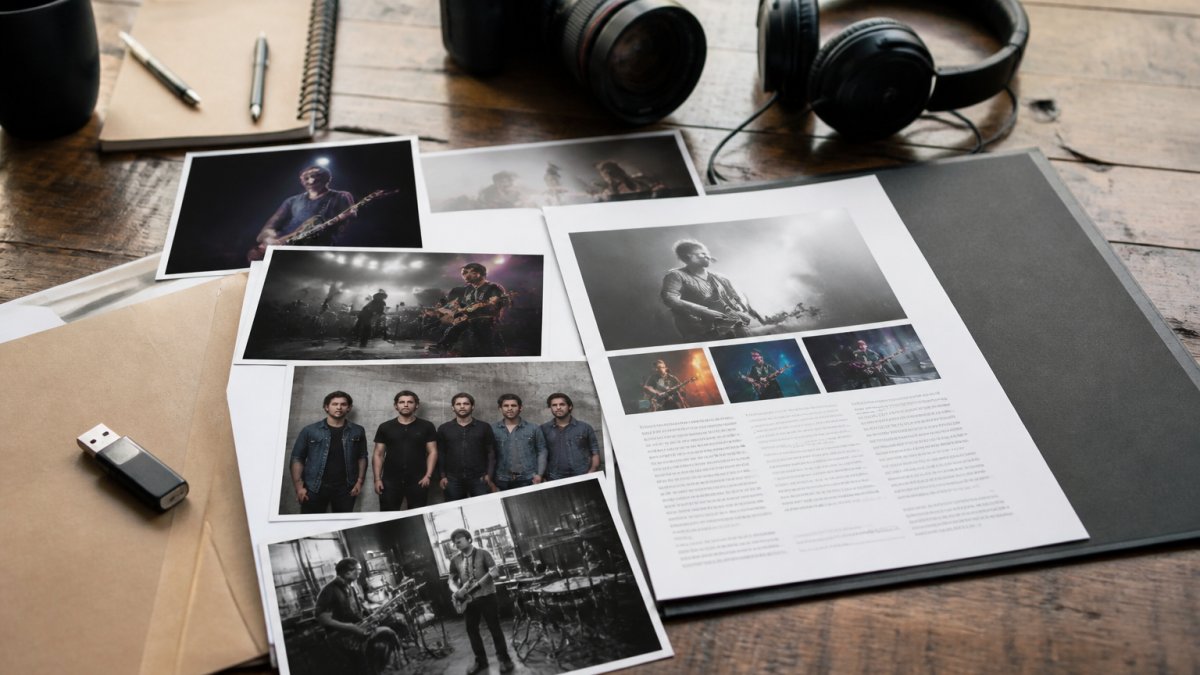
Learning how to assess photographer portfolio quality starts with one shift: stop scrolling and start scoring. A photographer portfolio is a curated body of work that shows how a photographer sees, lights, edits, and delivers images across a full project. At James DeSalvo Photography, we have watched bands and label teams book on vibes alone, then wonder why the final gallery felt flat. A weighted rubric fixes that by forcing you to name why a gallery works, and to compare candidates on the same scale.
Most practitioners find that unweighted checklists fail because they treat a blown highlight the same as a weak story. Weight the criteria to your brief. A simple starting point for a live-music brief:
| Criterion | Weight | What a 5 looks like | What a 2 looks like |
|---|---|---|---|
| Technical competence (sharpness, focus, exposure) | 25% | Eyes and hands sharp at 100%, highlights held on skin and stage lights | Soft faces, clipped highlights, focus on the wrong subject |
| Lighting control | 20% | Light shaped on purpose, whether stage wash or single window | Flat or survived light, no direction |
| Composition and framing | 15% | Frames guide the eye and leave room for text and social crops | Centered snapshots, crowded edges |
| Visual storytelling | 15% | The set says something about the act, not just the performance | Random hits with no through-line |
| Consistency across the project | 15% | Quality holds from first frame to last | One perfect frame per shoot |
| Assignment fit | 10% | Work matches your venue, lighting, and deliverables | Great studio work, no live evidence |
Score each criterion 1-5, multiply by its weight, and add. A weighted total under 3.0 out of 5 is a warning sign, not a dealbreaker, it tells you which criterion to probe in the full gallery. The rubric just forces you to name why a gallery works.
The Six Criteria That Decide Most Bookings
Most hiring decisions come down to the same handful of factors. Image quality and technical quality set the floor. Artistic vision and creative style set the ceiling. Consistency and attention to detail tell you whether the photographer can repeat a result under pressure. Then comes the practical layer: professionalism, reliability, and cultural fit with your band or brand. Score all six and the conversation gets much shorter, but weight them to your brief, because a press-portrait assignment and a live-show assignment do not value the same criteria equally.
The Photography Portfolio Checklist for Technical Quality
Technical quality is the fastest way to filter a photographer portfolio. Zoom to 100% and look at the eyes, the hands, and the edges of the frame. If the face is soft, the image fails, no matter how good the moment was.
Run this photography portfolio checklist on every candidate:
- Eyes and faces are sharp at full size
- Focus lands where the photographer intended
- Highlights are not blown out on skin or stage lights
- Shadows keep detail instead of going black
- Color looks natural, especially skin tones
- Noise and grain look deliberate, not accidental
- Cropping leaves room for text and social formats
Sharpness, Focus, and Image Clarity
Sharpness is not about megapixels. It is about focus accuracy and lens craft. Image clarity separates a photographer who nails a moving singer in low light from one who hopes autofocus saves them. Ask to see a few images at full resolution, not just the compressed versions on a website.
Lighting, Exposure, and Color Accuracy
Lighting is where technical skill shows most. Strong light, whether a stage wash or a single window, should be shaped, not survived. Check exposure across a set: do the bright frames and dark frames both hold up? Then check color accuracy, particularly skin tones under mixed stage lighting. In practice, this is the detail that separates a usable press photo from one an editor rejects.
Read Photographer Portfolio Examples Like an Editor
Editors read portfolios differently than fans do. They scan for image selection, not image count. A tight set of twelve strong frames beats sixty average ones, because portfolio curation is itself a skill. When you study photographer portfolio examples, ask what was left out. The gaps tell you how the photographer thinks.
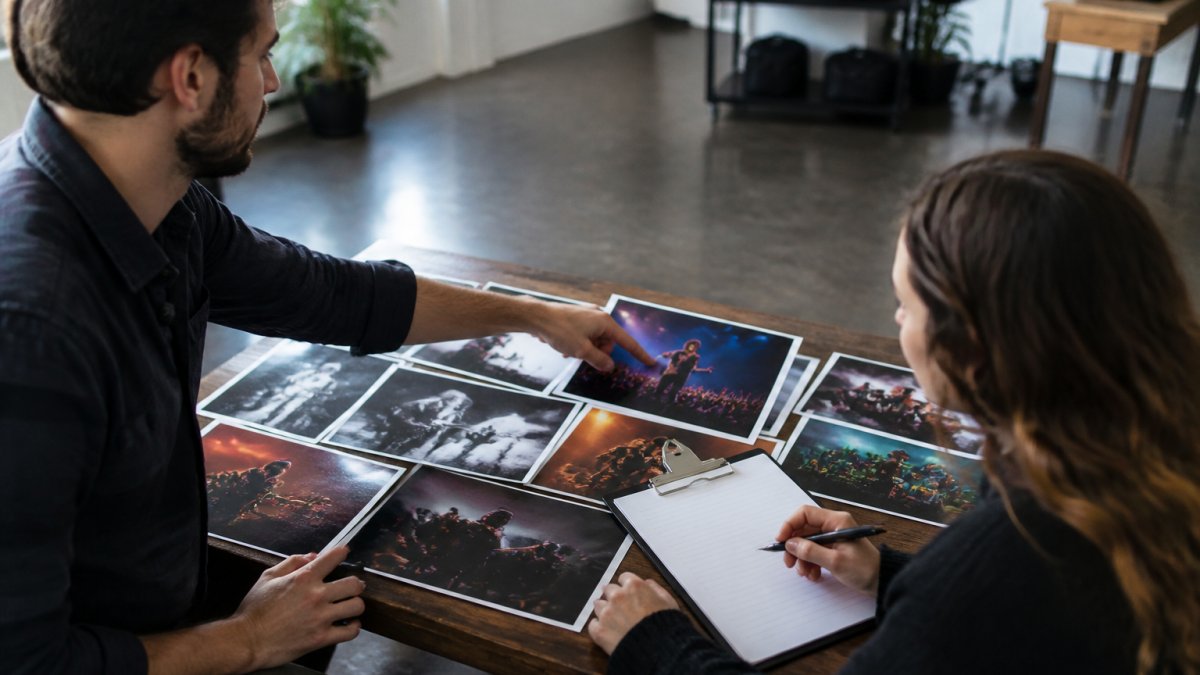
Look for sequencing, too. Does the gallery build a mood, or does it just stack hits? Visual consistency across the set signals a photographer who can hold a creative style through a whole shoot. For a plain-language reference on what makes an image read well, the Getty Images guide to composition is a solid primer.
Review the Full Gallery, Not the Highlight Reel
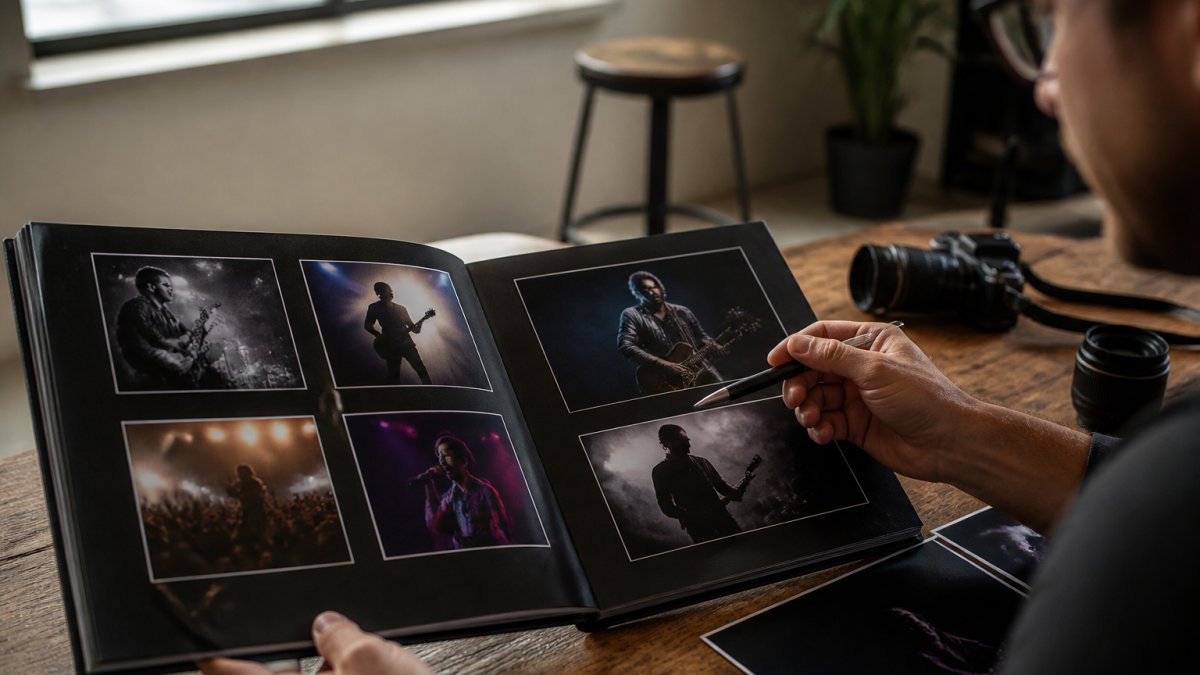
Ask for a full gallery from a recent shoot, not the portfolio. This is the single most useful step in the whole process. A highlight reel shows the best 2% of a project. A full gallery shows delivered images, the weak frames included, and that is where reliability lives.
Request it in writing and be specific: ask for one complete gallery from a shoot similar to your brief, delivered as the client received it, including the final edit and any retouching notes. A common pattern is that photographers share a curated subset even when asked for a full gallery, so confirm the count against the delivery contract or invoice if you can.
When you review the full set, score it the same way you scored the portfolio:
- Usable-frame ratio: How many frames are genuinely usable? A low ratio is not automatically bad on a fast live shoot, but it should match the difficulty of the conditions.
- Consistency from start to finish: Does quality hold across the whole set, or does it collapse in the second half?
- Difficult conditions: How does the photographer handle dark venues, fast movement, and mixed stage light?
- Editing and retouching: Is color and retouching consistent, or does it drift frame to frame?
- Delivery completeness: Was the gallery delivered on schedule and complete, or were images added later?
This step also surfaces client expectations. A photographer who delivers a clean, complete gallery on schedule is telling you something a curated portfolio never can. Pair the gallery review with a reference check: ask for two recent clients on comparable shoots and ask them about delivery, communication, and whether the final images matched the portfolio. Reviews and contracts validate reliability beyond the curated images.
What a Band Photography Portfolio Must Prove
A band photography portfolio has to prove more than good taste. It must show event coverage under pressure: dark venues, moving subjects, harsh stage light, and no second takes. Look for live shots where the performer is sharp and the mood survives the noise.
Then check the promotional side. Band portraits, press images, and social-ready crops should look like they belong to the same visual world. Visual storytelling matters here: can the photographer capture the personality of a act, not just a performance? A portfolio that only shows concert frames leaves the portrait and branding question unanswered.
How to Choose a Music Photographer for Your Brief
Choosing a music photographer comes down to matching portfolio evidence to your specific brief. A great live shooter is not automatically the right pick for a controlled studio portrait session, and the reverse is just as true. Write your brief first, then score candidates against it.
Use this decision framework:
| If your brief needs... | Prioritize... | Check in the portfolio... |
|---|---|---|
| Live show coverage | Event coverage speed | Sharp action frames in low light |
| Press and promo portraits | Lighting control | Clean skin tones, strong light |
| Album artwork | Artistic vision | A clear, repeatable creative style |
| Full campaign | Consistency | Quality across a whole project |
Ask about turnaround and delivery before you book. Pricing depends on scope, dates, and delivery, so request a quote directly rather than guessing. To see how a music-focused portfolio handles these demands, James DeSalvo Photography's music work shows the range across live, portrait, and editorial assignments.
Frequently Asked Questions
What should you look for in a photographer's portfolio before hiring?
Look for four things: technical quality (sharpness, focus, clean exposure), consistency across the whole set, a clear creative style, and evidence that the photographer has shot work like yours. A photographer portfolio built for music clients should show live performance, promotional portraits, and behind-the-scenes frames. Check color accuracy in skin tones, composition, and how the subject is framed. Then ask to see a full gallery from one assignment, not just the best ten images, so you can judge how they perform across a whole project.
How many images should a photographer's portfolio include?
A focused portfolio usually works better than a large one. Many photographers show 20 to 40 images grouped by project or client type, because editors and managers scan quickly and lose patience with long galleries. What matters is that every image earns its place. A tight set of strong frames tells you more about skill than 200 mixed shots. When you review, note whether the weakest image in the set is still usable. That floor, not the highlight, predicts what you will get delivered.
How can you assess whether a photographer can photograph musicians or bands?
Check whether the band photography portfolio includes low-light live sets, stage lighting, movement, and candid moments between songs. Concert photography is hard: fast action, colored lights, and no second takes. Look for sharp eyes and faces in dim venues, clean skin tones under colored gels, and frames that catch performance energy rather than just posed shots. Also ask how they handle a full show, including set changes and crowd shots, and whether they have shot your genre or venue size before.
What questions should you ask a photographer after reviewing their portfolio?
Ask which images were shot for a client brief versus personal work, how much editing each image received, and what a full gallery from one assignment looks like. Ask about turnaround time from shoot to delivery, how they handle image selection, and whether they carry backup gear. For music work, ask how they shoot in low light and whether they have covered venues like yours. Finally, ask what they need from you before the shoot so the delivered images match the mood you discussed.
Assessing a photographer portfolio takes an hour and saves you a reshoot. Score the work, review a full gallery, and match the evidence to your brief. James DeSalvo Photography specializes in music industry photography for musicians, bands, managers, labels, and magazine editors, covering live shows, press portraits, and editorial assignments. Get in touch with James DeSalvo Photography to discuss your project and see whether the work fits what you need.