 how-to
Music Photography Creative Brief: What to Include
Table of Contents
- Why a Music Photography Creative Brief Matters
- Step 1: Define Your Artist's Goals and Photography Needs
- Step 2: Describe Your Visual Identity and Brand
- Step 3: Create a Music Photography Brief Template
- Step 4: Build Your Band Photoshoot Ideas and Shot List
- Step 5: Plan Band Portraits for Social Media and Press
- Step 6: Specify Image Deliverables and Technical Requirements
- Step 7: Clarify Usage Rights, Licensing, and Budget
- Define who owns the images and how they can be used
- Set geographic and time-based limits
- Require proper crediting and attribution
- Address model releases and talent consent
- Specify exclusivity and competitive restrictions
- Discuss the photographer's portfolio and social media rights
- Outline budget, scope, and what's included
- Create a usage rights summary for your brief
- Frequently Asked Questions
Last Updated: October 10, 2026
Why a Music Photography Creative Brief Matters
A music photography creative brief is a written document that communicates your vision, goals, and specific needs to your photographer before the shoot begins. It's the difference between images that miss the mark and photos that perfectly capture your artist's identity.
Without a clear brief, photographers guess, delivering technically perfect shots that miss your brand, mood, or social media angles. A strong creative brief prevents these mistakes.
Step 1: Define Your Artist's Goals and Photography Needs
State what you need the photos for, each use case shapes the shoot. Be specific about your goals:
- Press photos for music journalists and publications
- Promotional images for streaming platforms and playlists
- Band portraits for your website and social channels
- Album artwork or cover concepts
- Live performance documentation
- Behind-the-scenes content for fans
Specify how many final images you need, which formats matter most (high-res for print, square for Instagram, vertical for TikTok), and your timeline. A photographer who knows your deadline can plan the shoot and post-production workflow accordingly.
Step 2: Describe Your Visual Identity and Brand
Describe your artist's overall aesthetic and personality (minimalist or maximalist, vintage or modern, edgy or approachable). Name your music genre and artists whose visual style you admire, this gives your photographer concrete reference points. Explain what makes your artist visually distinctive: signature look, color palette, clothing style, or visual theme.
Step 3: Create a Music Photography Brief Template
A structured template keeps your brief organized and ensures you cover everything important.
Essential template sections
Use this framework for your own creative brief:
| Section | What to Include | Why It Matters |
|---|---|---|
| Artist/Band Name & Genre | Full name, music style, key influences | Photographer understands context |
| Shoot Goals | Press kit, social media, album art, etc. | Shapes shot list and deliverables |
| Visual Style | Mood, aesthetic, color palette, references | Ensures photos match your brand |
| Locations & Settings | Studio, outdoor, venue, or specific spots | Affects lighting and logistics |
| Shot List | Specific poses, angles, and scenarios | Guarantees you get what you need |
| Technical Specs | File formats, resolution, aspect ratios | Ensures files work for your channels |
| Usage Rights | How you'll use the images, exclusivity | Protects both parties legally |
| Budget & Timeline | Shoot date, deadline, investment | Sets clear expectations |
Fill out this template completely before contacting photographers. A detailed brief signals professionalism and clarity.
Step 4: Build Your Band Photoshoot Ideas and Shot List
Your shot list is the backbone of your creative brief, the specific images you need the photographer to capture.
Developing your music photoshoot shot list
Consider each band member individually and the group together. Band-specific shots:
- All members together, posed and candid
- Subgroups (vocalist with guitarist, rhythm section, etc.)
- Each member solo with their instrument
- Interaction shots (members playing together, looking at each other)
- Wide shots showing the full group and environment
For each shot, note the framing (close-up, medium, wide), pose, mood, and angle. Example: "Lead vocalist, close-up from shoulders up, looking directly at camera with confident expression, moody side lighting, black background." This detail prevents miscommunication.
Step 5: Plan Band Portraits for Social Media and Press
Different platforms need different image formats and styles.
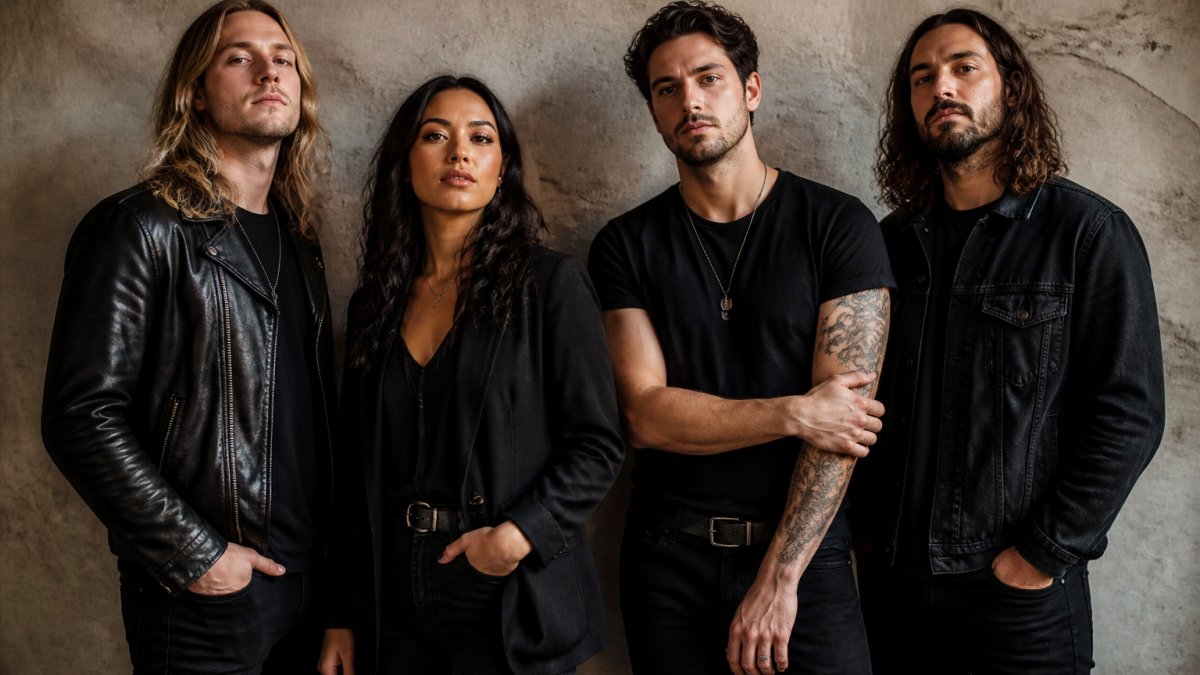
Press photos are typically high-resolution, formal band portraits. Music journalists need clear, professional images of your lineup. These shots work best with simple backgrounds and consistent lighting.
Social media photos can be more creative. Instagram prefers square or vertical formats. TikTok works with vertical video stills. Pinterest favors tall vertical images. Specify which platforms matter most for your artist.
For band portraits, specify background style, clothing, props, spacing, and facial expressions. Decide if you want both posed and candid shots, posed portraits look polished, candid shots feel authentic.
Step 6: Specify Image Deliverables and Technical Requirements
Your photographer needs to know exactly what files you'll receive, how you'll use them, and what quality standards apply. This section transforms vague expectations into a concrete production contract.
Define your file format and resolution needs
Specify what you actually need, not everything.
For web and social media: JPEG format, sRGB color space, 72-150 DPI, minimum 1080px on longest edge, with square (1:1), vertical (4:5 or 9:16), and horizontal (16:9) crops as needed.
For print: TIFF or high-quality JPEG, Adobe RGB color space, 300 DPI minimum, full resolution (4000-6000px).
For archival: RAW files if you plan extensive retouching. RAW files require specialized software but give maximum control; most photographers charge extra for RAW delivery.
Specify quantity and delivery timeline
State exactly how many final, edited images you expect. A photographer shooting 500 frames typically delivers 80-150 polished, edited images. Asking for 500 final images means minimal curation and editing, which affects quality.
Also specify when you need first draft (1-2 weeks), fully edited finals (2-4 weeks), delivery method (cloud link, hard drive, or online gallery), and folder organization.
Clarify editing style and retouching scope
Define your editing preference: Minimal (exposure, white balance, color correction only), Standard (color correction, minor skin retouching, consistent color grading), or Heavy (extensive retouching, artistic grading, special effects). Mention specific looks you want, e.g., "warm, vintage color grade" or "high contrast black and white."
Address revisions and unlimited edits
Most photographers include 1-2 revision rounds. Clarify what counts as a revision: changing color grade, removing a person, or batch edits on 20 images typically each count as 1 revision. Extensive changes after first delivery may incur additional cost.
Specify aspect ratios and crop requirements
If you need multiple formats, specify: "All final images in 16:9, 1:1, and 9:16 crops" or "Album artwork as 3000×3000px; social media as 1080×1080px." Multiple crops from one shoot are more efficient than shooting multiple times, but discuss composition limitations with your photographer.
Deliverables checklist
Confirm you've specified: file format, resolution and DPI, color space, total final images, aspect ratios and crops, editing style, revision rounds, delivery method and timeline, folder organization, and RAW file inclusion. This detail enables accurate quoting and efficient planning.
Step 7: Clarify Usage Rights, Licensing, and Budget
Usage rights and budget are where creative briefs become legal and business documents. Clarity here prevents disputes, protects your investment, and sets expectations both parties can honor.
Define who owns the images and how they can be used
Photographers own copyright by default; you receive a license to use images for specific purposes. State whether the photographer retains copyright or you purchase full ownership. Full ownership is rare and typically costs more; most briefs grant you a license while the photographer retains copyright.
Specify which channels and formats you can use images on: social media (which platforms?), streaming platforms, website and blog, print, paid advertising, third-party licensing, and merchandise. Example: "Images may be used on our band's social media, website, and press kits. Images may not be licensed to third parties or used in paid advertising without written permission."
Set geographic and time-based limits
Specify territory (worldwide or limited regions), duration (perpetual or limited years), and exclusivity (can the photographer license to other bands or use in portfolio?). Example: "Images are licensed for worldwide use on social media and website for 3 years. After 3 years, the photographer may use images in their portfolio."
Require proper crediting and attribution
Specify credit format ("Photo by [Name]" or "© [Name]"), where credits appear (captions, video descriptions, liner notes, website), and whether you tag the photographer on social media. Example: "All social media posts must include the photographer's name in the caption. Album artwork must include '© [Photographer Name]' in liner notes."
Address model releases and talent consent
If the photographer wants to use images in their portfolio or promotional materials, you'll need signed model releases from all band members. The photographer typically provides the form. If a band member objects to public use, communicate that immediately, some photographers will exclude that person from portfolio use.
Specify exclusivity and competitive restrictions
Specify exclusivity: Exclusive use (photographer cannot use images elsewhere, expensive and rare), Non-exclusive use (photographer can use in portfolio but not license to competing bands), or Portfolio use only (photographer can show to clients and on website but not license or sell). Example: "Images are licensed for non-exclusive use. The photographer may include images in their portfolio and website but may not license to other bands or use in paid advertising without written permission."
Discuss the photographer's portfolio and social media rights
Clarify whether the photographer can post to Instagram or website immediately, tag your band, use images in case studies or blog posts, and submit to competitions. Most photographers appreciate portfolio use, it builds their reputation. If you need an embargo, explain why (e.g., "images are exclusive to a press release on [date]").
Outline budget, scope, and what's included
Discuss what the shoot fee includes (hours, photographer count), whether editing is included or separate, how many revision rounds are included, how many final images you'll receive, whether RAW files are included, travel and location cost responsibility, rush fee policies, and who covers props, styling, equipment rentals, and assistant costs.
Create a usage rights summary for your brief
Include a simple table or checklist so both you and the photographer are on the same page:
| Right | Granted? | Notes |
|---|---|---|
| Social media use (all platforms) | Yes | Must credit photographer in caption |
| Website and blog | Yes | Perpetual license |
| Paid advertising | No | Requires separate agreement |
| Print and merchandise | Yes | Limited to band's own products |
| Third-party licensing | No | Photographer retains right to license |
| Photographer portfolio use | Yes | May post to website and Instagram |
| Exclusivity | No | Non-exclusive license |
| Duration | 3 years | After 3 years, photographer may use freely |
| Territory | Worldwide | No geographic restrictions |
| Model releases | Yes | All band members will sign |
This clarity prevents misunderstandings and protects both parties. When a photographer sees a detailed usage rights section, they know you understand the business side and can quote and plan accordingly.
Frequently Asked Questions
What should a music photography creative brief include?
A strong music photography creative brief covers your artist's goals, visual identity, mood and atmosphere, specific shot requirements, locations, styling details, and image deliverables. It should also clarify usage rights, technical specifications (file formats, resolution), and timeline. The brief acts as a shared reference between you and the photographer, reducing misunderstandings and ensuring the final images match your vision for press kits, social media, and promotional use.
How do you write a music photography brief template?
Start with sections for artist background and goals, visual style references, shot list (specific poses and scenarios), location details, styling and wardrobe notes, mood and atmosphere, required deliverables (number of final images, formats), usage rights, and timeline. Include space for mood boards or inspiration images. A well-structured template becomes reusable for future shoots and helps photographers understand your needs before the session begins.
What information should a photographer get before a music shoot?
Photographers need your artist's genre and audience, the shoot's purpose (promotional, press kit, social media), specific shot ideas and poses, location and lighting conditions, styling and wardrobe details, mood and atmosphere you're targeting, and any visual references or inspiration images. They also need to know deliverable specifications (file count, formats, resolution), usage rights, and timeline. This information ensures they bring the right gear and approach your vision with confidence.
How many final images should a music photography brief request?
The number depends on your budget, shoot duration, and intended use. A typical session might deliver 20-50 edited final images for a band or solo artist. Press kits often need 5-10 hero shots, while social media content requires 15-30 varied images showing different moods and compositions. Discuss deliverable quantity with your photographer early, as this affects pricing, editing time, and overall project scope.