 blog
blog
Willie and Kim Alternative: Music Photography Options
Table of Contents
- What a Willie and Kim Alternative Actually Means for Bands
- musician promotional photography: What to Look For
- band photoshoot planning: A Step-by-Step Approach
- photographer questions before booking: A Practical Checklist
- Comparing Music Photography Services Side by Side
- Portfolio and Style: How to Judge If a Photographer Fits Your Sound
- Booking and Availability: What to Expect
- Frequently Asked Questions
Last Updated: October 14, 2026
What a Willie and Kim Alternative Actually Means for Bands
Searching for a Willie and Kim alternative usually means one of two things: you have outgrown a general event photography team and need dedicated music imagery, or you want a second option to compare against before you book. Either way, you need a photographer who understands stages, low light, and how a band actually looks when it is working.
At James DeSalvo Photography, we work with musicians, band managers, promotional agencies, record labels, and magazine editors, so we see how often the brief gets lost between the first email and the final gallery. This guide covers what to look for, how to plan a shoot, what to ask before booking, and how to judge whether a portfolio matches your sound.
"Willie and Kim" is not a style, a package tier, or an industry standard. It refers to a specific photography outfit some bands have used for events and promotional work. When people search for a Willie and Kim alternative, they want a different photographer who can deliver comparable coverage, not a different genre of service.
That distinction changes what you compare: not a new category of vendor, but whether another photographer fits your band's visual identity, budget, and timeline better than your current one.
musician promotional photography: What to Look For
Musician promotional photography creates images that represent an artist or band across press kits, social profiles, album art, and booking pitches. It is not event coverage, and it is not a standard portrait session.
The difference shows up in the details: promotional photography has to work in a thumbnail, on a poster, and in a magazine spread at once. That means deliberate lighting, a clear visual concept, and enough variety in one session to cover several months of releases.
Here is what separates a strong promotional photographer from a competent one:
- Low-light capability. Clubs and venues are dark. A photographer who only shoots in daylight will struggle.
- Direction on set. Most musicians are not models. Someone has to guide poses without making it feel stiff.
- Understanding of release cycles. Singles, EPs, and tours each need different image sets.
- Consistency across sessions. Your look should hold together from one shoot to the next.
- Comfort working with stylists. Makeup artists, hairstylists, and fashion designers often sit inside the same production.
A common mistake is booking based on a single striking image. Ask for a full gallery from one session instead, consistency across twenty frames tells you far more than one lucky shot.
band photoshoot planning: A Step-by-Step Approach
Band photoshoot planning starts with a written brief, not a location. Decide what the images are for before you decide where to stand.
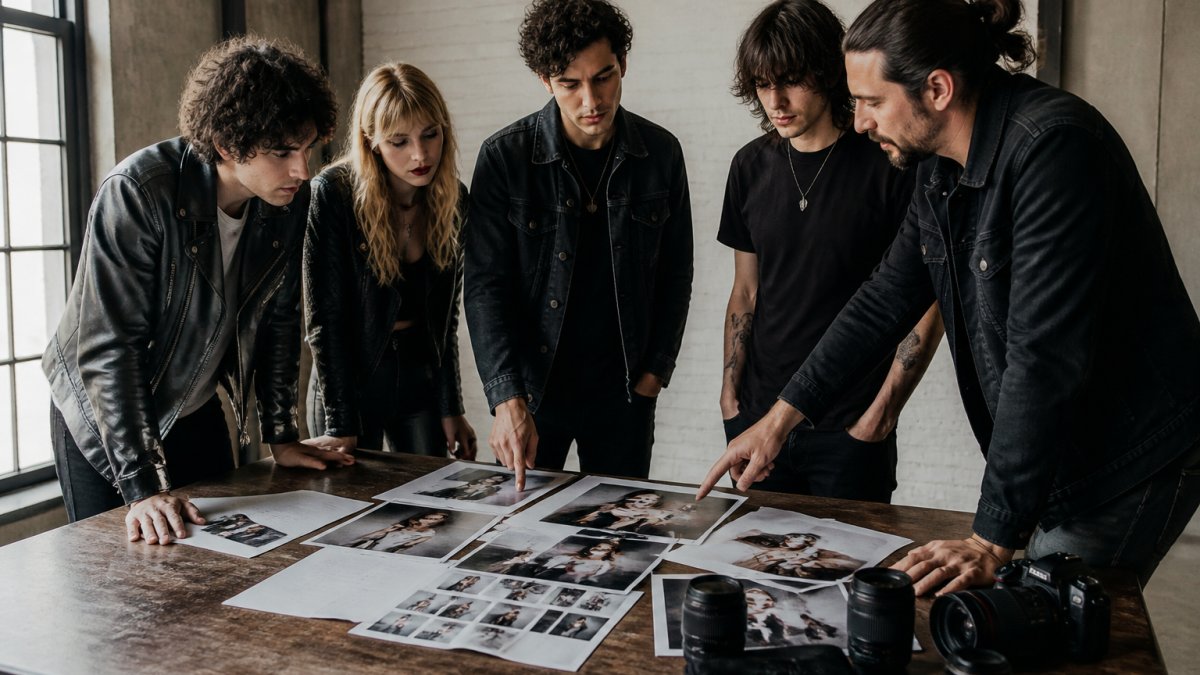
Work through these steps in order:
- Define the purpose. Press kit, album art, social content, or all three. Each has different framing needs.
- Agree on a visual direction. Pull inspiration photos and share them before the shoot, not on the day.
- Choose the setting. A photography studio gives you controlled light. A venue or outdoor location gives you atmosphere.
- Confirm the crew. If you want hair and makeup, book it early. Stylists fill their calendars quickly.
- Build a shot list. Full band, individual portraits, instrument details, and a few candid frames.
- Set a delivery date in writing. Ask how long editing takes and when files arrive.
- Plan a backup location. Weather and venue access change without warning.
The bands that get the best results treat the shoot like a production, not an appointment: a call sheet, a time buffer, and someone responsible for the schedule.
photographer questions before booking: A Practical Checklist
Asking the right photographer questions before booking prevents the most common disappointment: images that look nothing like what you discussed.
Use this checklist before you sign anything.
- Can I see two or three complete galleries from similar work, not just highlights?
- Who owns the copyright, and what usage rights do I get?
- How many edited images are included, and how are they selected?
- What is the turnaround time from shoot to delivery?
- Do you shoot video as well, or stills only?
- What happens if a band member is sick or the venue cancels?
- Is there a deposit, and what is the cancellation policy?
- Will you sign a simple agreement covering scope and delivery?
The usage rights question is the one most bands skip and later regret. If you plan to print posters, submit to magazines, or hand images to a label, confirm in writing that those uses are covered. Turnaround matters just as much: if you are announcing a tour, images that arrive three weeks later are useless. Get a date, not a range.
Comparing Music Photography Services Side by Side
Most bands and managers compare photographers by scrolling portfolios and trading names, but two photographers can show equally strong images and still be wrong for your project.
Coverage type. Some photographers specialize in live performance, some in studio promotional work, some in both.
Visual style. Style is not a vibe word but a set of repeatable choices: contrast, color temperature, negative space, and framing. Pull three images from each candidate's portfolio and describe what they have in common.
Deliverable structure. Ask exactly what arrives after the shoot: how many edited frames, what resolution, what aspect ratios, and whether you get a mix of horizontal and vertical crops.
Usage and rights. The axis most bands skip. Confirm in writing which uses are covered: press, print, merchandise, social, and paid advertising. Some grant broad usage, others license narrowly, neither is wrong, but know before you plan a poster run.
Production support. If your shoot involves a stylist, makeup artist, or creative director, ask whether the photographer has worked inside that kind of production. Comfort sharing a set with other creatives means a smoother day and better images.
| Axis | What Strong Looks Like | What to Ask |
|---|---|---|
| Coverage type | Live and studio, or a clear specialty that matches your need | Can you cover both a tour date and a press shoot? |
| Visual style | A consistent, describable pattern across a full gallery | Can I see two complete galleries, not highlights? |
| Deliverable structure | Defined count, resolution, and crop mix | What exactly arrives, and in what formats? |
| Usage and rights | Written scope covering press, print, and social | Which uses are included, and which cost extra? |
| Production support | Prior work with stylists and creative directors | Have you shared a set with a stylist before? |
For managers and label teams evaluating a photographer on behalf of an artist, add one question: can they deliver a consistent visual system across multiple artists on the same roster?
Portfolio and Style: How to Judge If a Photographer Fits Your Sound
Portfolio review is where most bands under-invest. A photographer's style should match your sound, not just your budget.
Start with genre. A punk band and an acoustic duo need different energy in the frame. Look for images that feel like the music, not images that simply look technically clean.
Then check range. A photographer who only shoots wide stage shots may struggle with tight promotional portraits. You want someone comfortable with both.
Look for these signals:
- Consistent color and contrast across a full gallery
- Variety in framing, from wide stage shots to close portraits
- Comfort with movement, since live performance is unpredictable
- Evidence of collaboration with stylists, venues, and other vendors
If a photographer has worked with makeup artists, hairstylists, and fashion designers before, the shoot day runs smoother. Those relationships usually show up in the polish of the final images.
Ask for a full gallery from one session and read it like an editor would. Do the images hold together? Would three of them work on a poster without clashing?
Booking and Availability: What to Expect
Booking a music photographer follows a predictable sequence, inquiry, scope and quote, deposit and date hold, shoot, edit, delivery, but the details inside each step are where projects succeed or stall.
Inquiry. Share your dates, the purpose of the shoot, the number of people involved, and your rough timeline. A photographer who asks follow-up questions about your release calendar and genre is already signaling how they work; vague inquiries produce vague quotes.
Scope and quote. Ask for a written scope naming the coverage type, the number of edited deliverables, the delivery window, and the usage rights.
Deposit and date hold. Most photographers hold a date once a deposit is received. Confirm the cancellation and reschedule policy in writing, especially if the shoot depends on venue access or a band member's availability.
Shoot day. Keep one point of contact. A single decision-maker prevents the mixed signals that slow a set down. If you have a stylist or creative director, confirm they have spoken with the photographer before the day, not during it.
Edit and delivery. Ask how editing works: who selects the final frames, whether you get a proofing pass, and the guaranteed delivery date, a date, not a range. If you are announcing a tour or pitching a label, late images are worthless regardless of quality.
For managers, promoters, and label teams, the booking conversation should also cover how the photographer fits a broader artist-development plan.
A few practical notes that apply across all of these:
- Confirm whether travel to your venue is included or billed separately.
- Ask how many people can be in the frame at once if you have a large lineup.
- Check whether you receive a mix of edited and unedited files, or edited only.
- Ask whether the photographer retains the right to use the images in their own portfolio, and whether you are comfortable with that.
Frequently Asked Questions
What should I look for in an alternative to Willie and Kim?
Look for a photographer whose portfolio matches your genre and visual goals, not just someone with availability. Check whether they shoot music projects regularly, ask about their process for band photoshoot planning, and request a full gallery from a similar shoot. Confirm they can handle promotional photography for album art, press kits, and social content. Also ask about turnaround times and how they handle licensing for commercial use.
How do I compare photographers for a band or musician photoshoot?
Start by reviewing full portfolios, not just highlight reels. Look for consistency in lighting, editing, and how they capture live performance versus posed shots. Ask each photographer about their experience with musician promotional photography and whether they have worked with your genre. Compare what is included: retouching, usage rights, number of final images, and delivery timeline. A side-by-side comparison of these factors reveals more than price alone.
What questions should I ask a photographer before booking?
Ask about their experience with band photoshoot planning, including how they scout locations and handle group dynamics. Confirm what licensing you receive for promotional use. Ask for references from other musicians. Clarify turnaround time, retouching policy, and whether they provide both vertical and horizontal crops for different platforms. Finally, ask how they handle creative disagreements or last-minute changes to the shoot concept.
How can I tell whether a photographer's style fits my music project?
Request to see a complete gallery from a shoot similar to what you want, not just a few edited highlights. Look at how they handle lighting in low-light venues if you need live shots, or how they pose groups if you need promotional images. Ask if they have shot your genre before. If their portfolio leans toward corporate headshots but you need gritty live photography, their style may not align. Trust your gut on whether the mood matches your sound.